Summary
A state-by-state overview of bicycle helmet laws, including age requirements, enforcement rules, and claim impact considerations. Read our comprehensive and ...
Quick Legal Answer: What this guide covers
A state-by-state overview of bicycle helmet laws, including age requirements, enforcement rules, and claim impact considerations. Read our comprehensive and ...
Quick Legal Answer: Core legal focus
This guide focuses on bicycle helmet laws by state within bicycle accident guides and the evidence, timelines, and standards typically evaluated under U.S. law.
Quick Legal Answer: When to verify with counsel
Because statutes and rules vary by state, confirm the specifics for your jurisdiction with a qualified attorney or official government resources.
Key Takeaways
- Understand the core rules and evidence standards tied to bicycle helmet laws by state.
- Track deadlines and procedural steps that shape recovery options.
- Document medical records, liability proof, and insurance communications early.
- Compare settlement posture with litigation risk based on the case record.
Bicycle Helmet Laws by State
Bicycle helmet laws by state legal context
Bicycle helmet laws by state liability map
Bicycle helmet laws by state evidence focus
Bicycle helmet laws by state settlement note
This guide explains bicycle helmet laws by state, how compliance affects damages, and which evidence supports head injury claims. It focuses on state statutes, local ordinances, and claim impact.
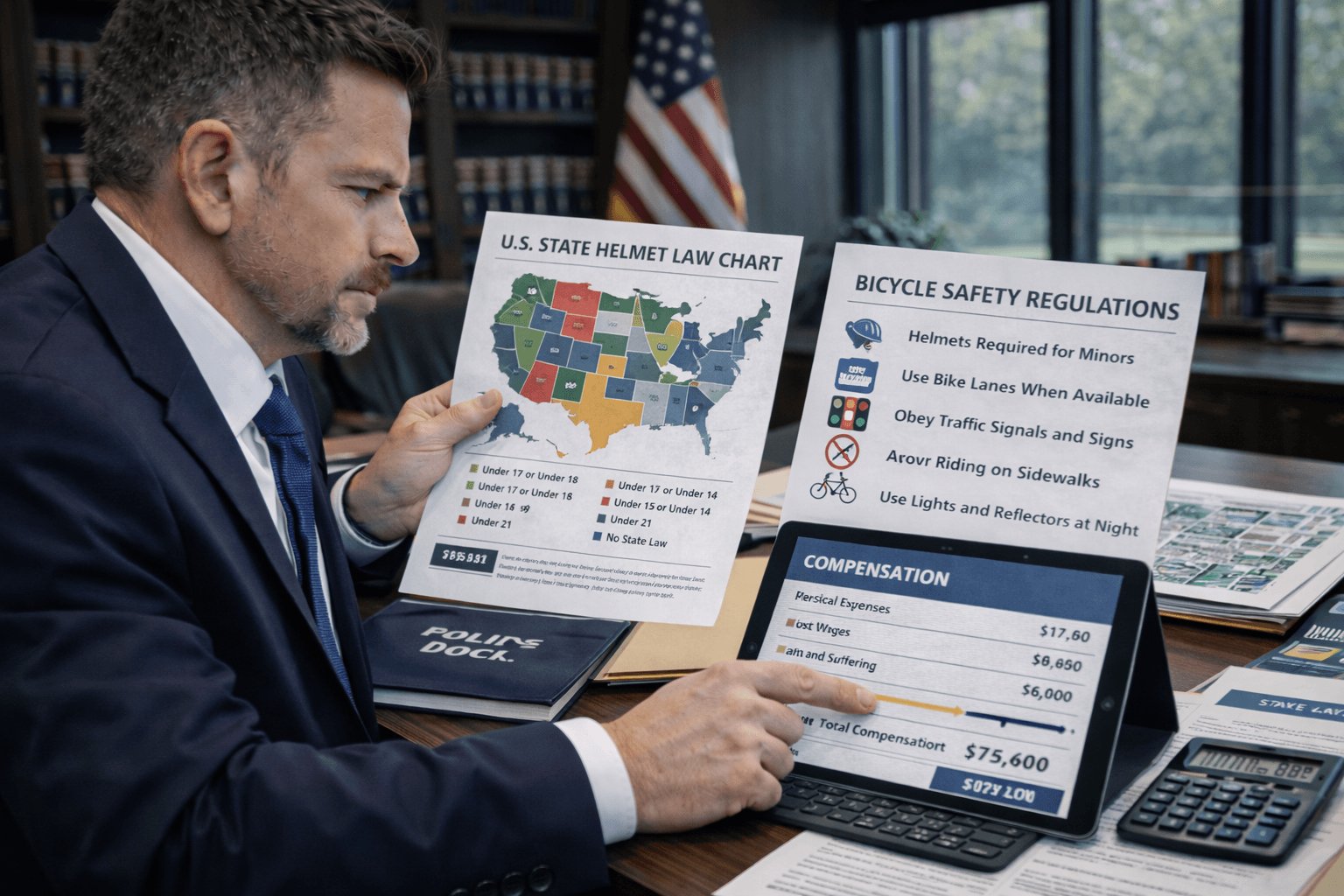
Bicycle helmet laws vary widely across the United States. Many states require helmets for minors, while others have no statewide rules. Some cities and counties impose local ordinances that are enforceable even when a state has no rule. bicycle helmet laws by state are therefore best understood as layered rules with different age thresholds, enforcement priorities, and claim implications.
For claims analysis, track helmet requirements, the governing bicycle helmet statute, any minor helmet law, and the impact of a local helmet ordinance. The legal consequences often turn on comparative fault or contributory negligence standards, plus injury mitigation arguments in head injury claims. The file should address damages reduction risks, settlement valuation impact, and practical evidence preservation steps tied to liability analysis. We also map cyclist safety context and e-bike helmet rules where state codes treat e-bikes differently.
This overview explains how bicycle helmet laws by state considerations shape evidence, liability, and recovery planning.
This guide explains the main legal categories, how helmet compliance affects liability analysis and damages, and what evidence practices help in head injury claims. It centers on state code guidance and local rules rather than informal summaries, while keeping the discussion practical for claim evaluation.
Definitions and Core Concepts
Helmet requirement refers to a legal duty to wear a helmet while operating a bicycle or a covered e-bike class. A minor requirement is the most common model, applying to riders under a specific age. Comparative fault and contributory negligence are liability concepts that can reduce damages if a rider’s conduct is found to have contributed to injury severity. Injury mitigation focuses on whether reasonable steps were taken to limit harm, which is often argued in head injury claims. A local ordinance is a city or county rule that can add requirements beyond state law.
Many states place the bicycle helmet statute within broader traffic codes, and a minor helmet law is often the operative standard for helmet requirements in everyday enforcement.
Federal and State Law Context
Helmet rules are primarily state and local. Federal resources, including NHTSA, provide safety context but do not set statewide helmet mandates. Official helmet requirements are found in state codes and local ordinances.
Helmet Law Categories
Common Categories
No statewide helmet law means adult and minor helmet use may be optional unless a local helmet ordinance applies. Minor-only helmet law requires helmets for riders under a specified age, which is usually defined by statute and can differ for regular bicycles versus certain e-bike classes. Expanded helmet law applies to broader age groups or specific bicycle types, and often includes municipal enforcement mechanisms.
Common enforcement patterns include warnings for first offenses, civil fines, or limited enforcement tied to other traffic stops. Some jurisdictions emphasize education and provide helmet programs, while others rely on municipal enforcement by ordinance.
How Helmet Laws Affect Claims
Comparative Fault Analysis
If a rider violated a helmet law, insurers may argue comparative fault for head injuries. This does not automatically bar recovery, but it can reduce damages.
Causation and Injury Mitigation
Helmet use is often analyzed in medical causation. Claims involving head injuries frequently include arguments about injury severity with or without helmet use.
Evidence Impact
Documenting helmet condition can support or rebut injury mitigation arguments.
Scope of Impact
Helmet compliance typically affects damages rather than primary liability. Even in a no statewide helmet law state, a local helmet ordinance may still create an argument about injury mitigation. Conversely, when helmet use is not legally required, insurers may still attempt damages reduction arguments based on reasonable care, which makes the evidence record important.
Who Is at Fault in Bicycle Accidents
Fault depends on right-of-way rules and driver conduct, not helmet compliance. Helmet laws may reduce damages for head injuries, but they do not change who caused the crash. Evidence of right-of-way compliance and lane position remains central to fault analysis.
Driver Negligence and Liability
Negligence includes unsafe passing, failure to yield, and dooring. A driver’s traffic law violation can establish liability regardless of helmet use. Helmet compliance may still be raised as a mitigation issue, but it does not excuse unsafe driver conduct.
Cyclist Rights Under Traffic Law
Cyclists generally have the same rights and duties as drivers and may lawfully use travel lanes when bike lanes are unsafe. These rights shape liability analysis and comparative fault, which should be evaluated separately from helmet compliance.
Insurance Claims After Bicycle Accidents
Insurers use helmet compliance to argue for reduced head injury damages. Coverage limits still cap recovery, and evidence quality drives settlement leverage. A detailed medical record can limit the impact of helmet arguments.
Evidence Needed for a Claim
Evidence should include helmet condition, medical records referencing helmet use, and copies of the applicable state or local helmet law. Police reports, scene photos, and witness statements support liability analysis and help separate fault from mitigation issues.
Settlement and Compensation Examples
Compensation can include medical expenses, wage loss, future care, and pain and suffering. Helmet compliance may reduce head injury damages in some states but does not eliminate recovery for non-head injuries. Policy limits still cap recovery.
Steps to Take After a Bicycle Accident
Preserve the helmet, photograph its condition, and obtain the police report. Collect medical records that document head injuries and treatment. Verify the applicable state and local helmet laws to prepare for insurer mitigation arguments.
When to Contact a Lawyer
Contact a lawyer early if head injuries are severe, liability is disputed, or local helmet ordinances are unclear. Legal help is also important when insurers attempt to overstate the impact of helmet non-use on damages.
Evidence Preservation Section
Evidence Checklist
Helmet condition and photographs, medical records referencing helmet use, police report notes on helmet use, and copies of the relevant state code guidance or local ordinance are all useful. For e-bike helmet rules, capture the bike class or product documentation to establish which statutory rules apply.
Helmet condition has the highest risk of loss because damage can be repaired or the helmet can be discarded. Police report notes are time sensitive and should be obtained early. Local ordinance text is relatively stable but should still be saved to prevent later confusion about the applicable version.
Step-by-Step: Checking Helmet Laws
Step 1: Identify State and Local Rules
Use official state code and local ordinance sources.
Step 2: Determine Age Thresholds
Confirm whether the rider’s age triggers a requirement.
Step 3: Document Helmet Use
Preserve the helmet and capture photos after the crash.
Step 4: Evaluate Comparative Fault Exposure
Assess whether helmet non-use could reduce head injury damages.
Step 5: Review E-Bike Class Rules
Some states impose different helmet requirements based on e-bike class, speed capability, or whether a bike has a throttle. Confirm the class and cross-check it with the state statute before assuming the same rules apply as a standard bicycle helmet statute.
Settlement Valuation Section
Helmet law compliance can affect settlement value, especially for head injuries.
Valuation Inputs
Helmet compliance status, injury type and severity, medical evidence on causation, and comparative fault rules are primary inputs. In some jurisdictions, a damages reduction argument only applies to head injury claims and does not impact non-head injuries, so the medical allocation of damages can matter.
If the helmet was worn and documented, the claim often faces fewer injury mitigation arguments. If a helmet was not required by law, the impact on settlement valuation is usually limited. If the helmet was required but not worn, insurers may raise comparative fault or damages reduction arguments focused on head injury claims.
Insurance Coverage Layers
Coverage Checklist
- Driver liability policy
- Cyclist UM/UIM coverage
- MedPay or health insurance
Coverage analysis can also consider homeowner or umbrella policies in rare fact patterns, but those depend on policy language and state insurance rules. This is part of broader liability analysis and should be verified in the claim file.
Helmet Law vs Right-of-Way Disputes
Helmet law issues usually focus on injury mitigation and damages reduction, while right-of-way disputes focus on who violated traffic rules and caused the crash. Evidence for helmet law disputes centers on helmet condition, compliance, and medical causation. Evidence for right-of-way disputes focuses on traffic rules, roadway markings, and witness accounts. Both can appear in the same case, but they address different questions within fault and damages.
Helmet Law Readiness
Confirm that state and local helmet laws are identified, the helmet is preserved and photographed, police report notes are reviewed, and medical records reference helmet use or non-use. These steps strengthen evidence preservation and reduce uncertainty in settlement valuation.
Internal Navigation: Related Bicycle Accident Guides
- For the pillar guide, see bicycle accident lawyer guide.
- For helmet non-use analysis, read bicycle accident without helmet.
- For settlement context, see average bicycle settlement.
- For right-of-way rules, visit cyclist right-of-way laws.
- For police report guidance, read police report guide.
- Return to bicycle accident resources.
Frequently Asked Questions
Are helmet laws the same in every state? No. Each state sets its own requirements and age thresholds, and local ordinances can add rules in specific cities or counties. Always check both state statutes and local codes, especially when a crash occurs in a city with its own enforcement rules.
Do local helmet laws matter? Yes. A local helmet ordinance can apply even when there is no statewide requirement, which can affect municipal enforcement and damages reduction arguments. Local rules can create compliance duties that insurers use to argue mitigation, so saving the ordinance text is helpful.
Does helmet use affect non-head injuries? Usually no. Helmet compliance is typically argued in relation to head injury claims rather than other injury categories. It should not reduce damages for broken bones or soft tissue injuries that are unrelated to head trauma, unless a state law explicitly extends the impact.
Can a cyclist recover if they violated a helmet law? Often yes, but comparative fault or contributory negligence rules can reduce damages if a violation is linked to the severity of head injuries. Recovery for non-head injuries is typically unaffected. The effect depends on state law and medical evidence.
Should I keep the helmet after a crash? Yes. Helmet condition is important evidence and can support or rebut injury mitigation arguments. Preserve the helmet in its post-crash condition and photograph it from multiple angles. This helps document impact severity and the presence of damage.
Where can I find official helmet laws? State legislative and DOT websites provide official code text, and local government sites publish municipal enforcement rules. Save the specific statute or ordinance that applies to your crash date to avoid disputes about which rules controlled at the time.
Related Resources
For broader context, review the Bicycle Accidents hub.
Related Guides
- Average Bicycle Accident Settlement
- Bicycle Accident Insurance Claim Guide
- Bicycle Accident Lawyer Near Me: How to Choose the Right Firm
Pillar guide: Bicycle Accident Lawyer: Dooring, Right-of-Way, and Helmet Laws
Helpful Tool
Use the Bicycle Damage and Gear Loss Log Google Sheets to organize documentation, expenses, and insurance claim records while applying this guide.
More Bicycle Accidents Guides

Food Delivery Bicycle Accidents: Liability and Insurance Layers
A U.S. legal guide to food delivery bicycle accidents covering platform liability, driver status, insurance coverage layers, and evidence preservation.

Car Door Bicycle Accident: Dooring Liability and Evidence
A U.S. legal guide to car door bicycle accidents (dooring), covering liability standards, evidence preservation, and insurance coverage. Read our comprehensi...

Bicycle Wrongful Death Lawsuit: Liability, Damages, and Deadlines
A U.S. legal guide to bicycle wrongful death lawsuits covering liability standards, damages, estate vs. family claims, evidence preservation, and filing dead...

Bicycle Accident Lawyer: Dooring, Right-of-Way & Helmet Laws
Bicycle Accident Lawyer guide for dooring, right-of-way, and helmet law claims under U.S. liability, evidence, insurance, and damages rules. Read our compreh...

Hit-and-Run Bicycle Accident
Essential guide to hit-and-run bicycle crashes, including evidence preservation, UM/UIM coverage, and claim timelines. Learn how to recover even when the dri...

Electric Bike Accident Lawyer
A guide to electric bike accidents, including e-bike classifications, right-of-way rules, evidence preservation, and settlement strategy. Read our comprehens...
Related Documentation Tools
View all toolsThese free spreadsheets help organize evidence, deadlines, and claim documentation for this topic.
Bicycle Accident Settlement Estimator Google Sheets
Estimate negotiable case value and keep damages evidence aligned with Settlement Calculator and Medical Expenses before you share records with an insurer or attorney.
Bicycle Accident Insurance Claim Tracker Google Sheets
Estimate negotiable case value and keep damages evidence aligned with Accident Overview and Claim Tracker before you share records with an insurer or attorney.
Bicycle Accident Checklist Google Sheets
Build a timestamped evidence file that keeps facts consistent with 1 Accident Overview and 2 Driver Information before you share records with an insurer or attorney.
Bicycle Injury Documentation Tracker Google Sheets
Maintain a structured accident record from incident day through claim resolution with Accident Overview and Injury Log before you share records with an insurer or attorney.