Summary
A legal guide to intersection accident fault, including right-of-way rules, evidence collection, and liability analysis. Read our comprehensive and expert le...
Quick Legal Answer: What this guide covers
A legal guide to intersection accident fault, including right-of-way rules, evidence collection, and liability analysis. Read our comprehensive and expert le...
Quick Legal Answer: Core legal focus
This guide focuses on intersection accident fault within car accident guides and the evidence, timelines, and standards typically evaluated under U.S. law.
Quick Legal Answer: When to verify with counsel
Because statutes and rules vary by state, confirm the specifics for your jurisdiction with a qualified attorney or official government resources.
Key Takeaways
- Understand the core rules and evidence standards tied to intersection accident fault.
- Track deadlines and procedural steps that shape recovery options.
- Document medical records, liability proof, and insurance communications early.
- Compare settlement posture with litigation risk based on the case record.
Intersection Accident Fault
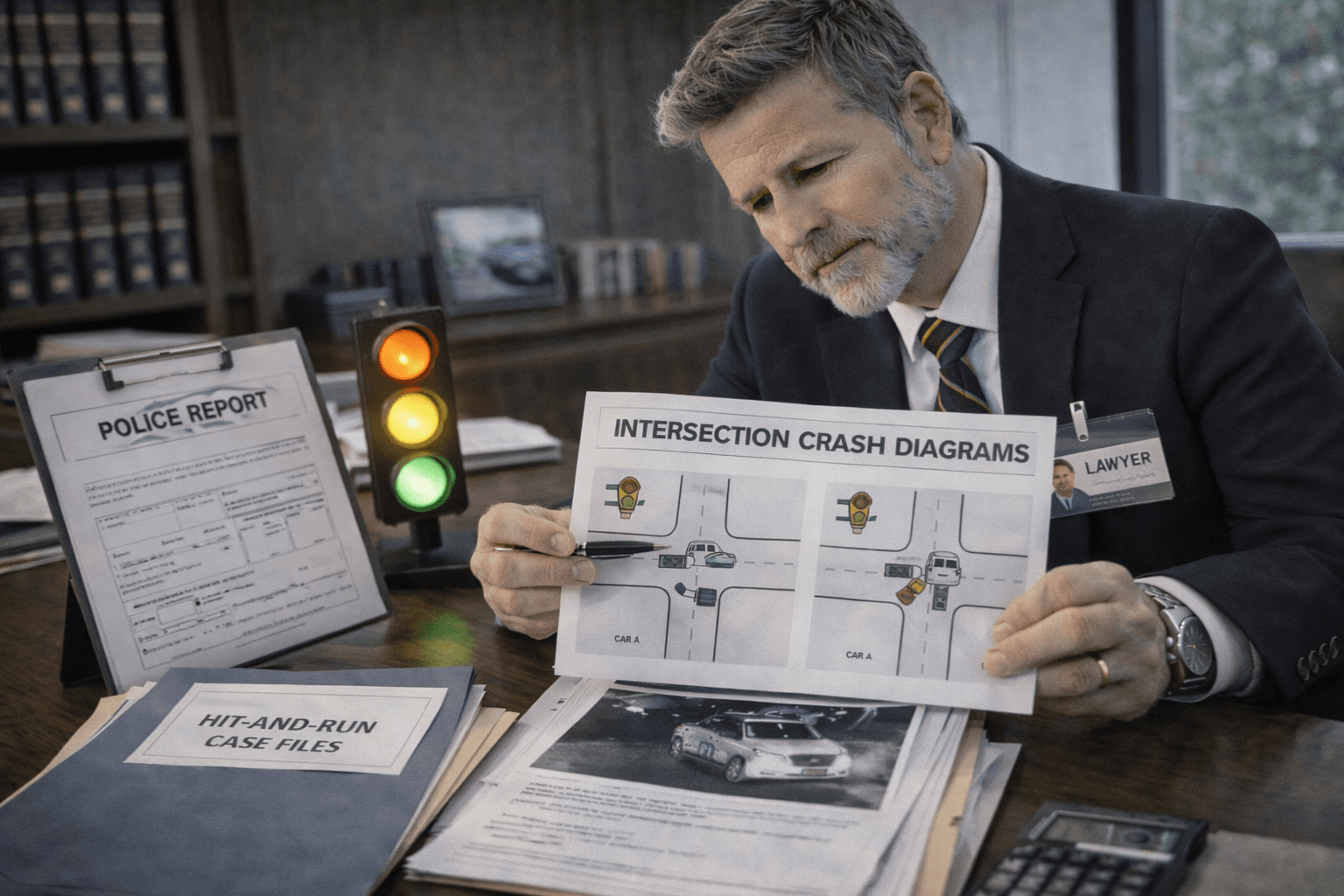
Intersection crashes involve complex right of way rules and frequent disputes about traffic signals or stop control. This guide explains how fault is determined in intersection accidents, what evidence matters most, and how liability is analyzed under U.S. law. Strong files secure signal timing data, confirm stop sign liability, and document red light violations alongside comparative fault exposure. When impact points are disputed, intersection crash reconstruction and skid mark analysis help resolve sight line obstruction issues. Video sources like dash cam footage and traffic camera retention requests support pedestrian right of way disputes and clarify roadway design factors that influence fault.
This overview explains how intersection accident fault considerations shape evidence, liability, and recovery planning.
Because intersections involve multiple traffic controls, conflicting driver accounts are common. Objective evidence, such as crash reports, signal timing data, and witness statements, often determines the outcome of liability disputes.
Definitions Used in Intersection Fault Analysis
Definition Table
The Term refers to right-of-way. Practical Meaning: Priority to proceed through intersection. Why It Matters: Core liability concept. The Term refers to controlled intersection. Practical Meaning: Traffic light or stop sign controls. Why It Matters: Determines driver duties. The Term refers to uncontrolled intersection. Practical Meaning: No signs or signals. Why It Matters: Requires yield rules. The Term refers to signal timing data. Practical Meaning: Light phase records. Why It Matters: Helps resolve green light disputes. The Term refers to comparative fault. Practical Meaning: Shared responsibility. Why It Matters: Reduces recovery.
Core Legal Framework for Intersection Fault
Fault is determined by state traffic laws and negligence rules. The key question is whether a driver violated a right-of-way rule or failed to exercise reasonable care.
Common Intersection Liability Scenarios
Common intersection liability scenarios include failure to yield at a stop sign, running a red light, unsafe left turns across oncoming traffic, speeding through a yellow light, and failures to yield to pedestrians or cyclists. Each scenario changes the right-of-way analysis and the evidence needed to confirm fault.
Evidence That Proves Intersection Fault
Evidence Priority List
The most persuasive evidence typically includes the crash report with citations, signal timing data or traffic camera footage, witness statements with contact details, photos of signage and sight lines, and vehicle damage patterns that show impact points.
Evidence Collection Checklist
Evidence collection should include photographs of traffic signals and signs, skid marks and lane markings, identification of nearby businesses with cameras, and prompt requests for signal timing data when the signal phase is disputed.
Step-by-Step Fault Analysis
Step 1: Identify the Type of Intersection
Determine whether the intersection is controlled by signals, stop signs, or is uncontrolled. This defines right-of-way rules.
Step 2: Establish the Signal Phase
If signals are involved, determine which direction had the right-of-way. Signal timing data and traffic camera footage can help.
Step 3: Evaluate Driver Conduct
Assess speed, lane positioning, and compliance with signage. Compare witness accounts and the crash report.
Step 4: Review Vehicle Damage Patterns
Impact points can confirm the angle of collision and vehicle positions.
Step 5: Apply Comparative Fault Rules
If both drivers contributed, assign fault percentages based on evidence.
Decision Table: Intersection Fault Scenarios
Red light violations usually place primary fault on the violating driver when signal timing and witness statements confirm the phase. Stop sign failures typically place fault on the driver who did not yield, supported by the report and photos of signage. Left-turn collisions often place fault on the turning driver, depending on lane positions and witness evidence. Uncontrolled intersections can produce shared fault when right-of-way rules and entry timing are unclear. Yellow light disputes often depend on timing and speed evidence, including signal timing and skid mark analysis.
Common Defenses in Intersection Cases
Green Light Defense
Drivers may claim they had a green light. Signal timing data and witnesses help resolve disputes.
Obstructed View Defense
Drivers may argue that visibility was blocked. Photos and roadway measurements help confirm or refute this.
Sudden Entry Defense
If a vehicle enters the intersection abruptly, the other driver may not have time to avoid impact. Evidence of speed and braking matters.
Checklist: Intersection Evidence Packet
An intersection evidence packet should include the crash report and citation data, photos of signal heads and signs, witness statements, traffic camera or dash cam footage, and documentation of signal timing data requests.
Settlement and Liability Tips
Tip 1: Preserve Signal Evidence Early
Traffic camera footage and signal timing records may be retained for short periods. Request them quickly.
Tip 2: Use Diagrams and Maps
Intersection diagrams help clarify vehicle positions and right-of-way rules.
Tip 3: Document Visibility Conditions
Photos of lighting and sight lines can counter claims about obstructed views.
Signal Timing and Data Requests
Signal timing data can clarify who had the right-of-way. Requests often need to be made quickly because some agencies retain data for limited periods.
Signal Timing Request Checklist
Signal timing requests should identify the controlling agency, request timing logs for the crash date and time, ask for the phase sequence and clearance intervals, and document request dates with responses.
Intersection Geometry and Design Factors
Intersection geometry shapes how drivers perceive gaps and whether a turn or entry is safe. The number of lanes, lane widths, medians, and turn bay lengths affect sight lines and the time required to clear the intersection. Wide intersections create longer exposure times, while short turn bays can force drivers to stop in awkward positions that reduce visibility. These physical conditions are often more persuasive than competing driver narratives because they can be measured and documented.
Signal design also matters. Some intersections use leading or lagging left-turn phases, and others use permissive yellow arrows or flashing signals that are often misunderstood. A signal plan that changes by time of day can create confusion if drivers assume the phase is always the same. When the signal plan and timing data show a phase change close to the crash, that timing can be central to the fault analysis.
Human Factors and Perception Timing
Intersection crashes often involve perception errors. Drivers frequently underestimate the speed of oncoming vehicles, especially when vehicles approach from a slight curve or are partially obscured by other traffic. Reaction time becomes critical because a driver may commit to a movement based on an initial perceived gap that closes faster than expected.
Visibility conditions can further distort perception. Glare, rain, and nighttime lighting can reduce the ability to see signal states or approaching traffic. When those conditions are present, the reasonable driver standard may require slower entry and greater caution. Documentation of lighting conditions, time of day, and weather can therefore change the allocation of fault.
Digital Evidence and Data Sources
Digital evidence frequently resolves conflicting accounts. Event data recorders can show pre-impact speed, braking, and throttle input, while dash cameras and traffic cameras can show the signal phase and vehicle positions. Cell phone data and navigation logs can help confirm routes, speeds, and time stamps. The strength of digital evidence depends on quick preservation because many systems overwrite data after short retention periods.
When digital evidence is missing, corroborating sources can fill gaps. Receipts, GPS logs, and time-stamped business cameras can establish a timeline that supports or contradicts the signal phase a driver claims to have seen. A documented attempt to preserve video or data can also be important if a party later disputes that evidence existed.
Commercial Vehicles and Institutional Drivers
If a commercial vehicle is involved, employer policies and training standards can affect fault. Commercial drivers are often required to follow stricter safety protocols, including full stops before turns or heightened caution in pedestrian zones. A violation of internal policy can support negligence even when traffic code compliance is disputed.
Institutional drivers, such as bus operators or delivery drivers, may also be subject to route constraints and scheduling pressures that influence intersection choices. Dispatch records and delivery logs can show whether a driver was rushing or deviating from a standard route, which can provide context for unsafe entry decisions.
Reconstruction and Causation Mapping
Accident reconstruction is especially useful at intersections because impact angles and vehicle positions can be ambiguous. Reconstruction uses damage profiles, skid marks, and vehicle rest positions to estimate speeds and trajectories. When those estimates align with signal timing data, the reconstruction provides a reliable sequence of events that supports a clear liability narrative.
Causation mapping connects crash mechanics to injury patterns. Side-impact collisions often produce different injury mechanisms than frontal or rear impacts, and those mechanisms should be consistent with the documented damage. When medical records align with the impact direction and severity, causation becomes easier to defend against claims that the injuries are unrelated or overstated.
Insurance Coverage and Settlement Framing
Coverage analysis is part of fault strategy. Even when liability is strong, policy limits may cap recovery and require evaluation of uninsured or underinsured motorist coverage. Early identification of all available policies reduces delay and improves settlement leverage. Coverage letters, declarations pages, and exclusions should be reviewed so that the settlement demand aligns with actual coverage.
Settlement framing should emphasize objective evidence rather than conflicting narratives. A demand package that ties each liability element to a specific piece of evidence, such as signal timing data or video footage, is more persuasive than a generalized assertion of fault. This approach also reduces the risk of overstating the claim and helps maintain credibility in negotiation.
Post-Crash Conduct and Preservation
Immediate post-crash steps can affect later fault analysis. Documenting the scene, preserving photos of signal heads, and recording witness contact information help avoid later disputes. If vehicles must be moved, photos and measurements taken beforehand preserve the positions that reconstruction relies upon.
Preservation requests should be sent quickly to any agency or business with potential footage. A brief delay can lead to loss of data if retention periods are short. Maintaining a record of these requests shows diligence and can help explain why evidence is unavailable if it later disappears.
Uncontrolled Intersections
At uncontrolled intersections, right-of-way rules are based on arrival order and yield duties. Evidence of who entered first can be decisive.
Evidence for Uncontrolled Intersections
Evidence for uncontrolled intersections should include witness statements, photos of roadway layout, and vehicle damage patterns that confirm travel paths and entry timing.
Pedestrians and Vulnerable Road Users
Drivers must yield to pedestrians in crosswalks where required. If a pedestrian or cyclist is involved, right-of-way rules and visibility conditions become central to fault analysis.
Comparative Fault and Allocation Standards
Intersection crashes frequently involve shared fault because multiple decisions happen within seconds. One driver may enter on a late yellow while another accelerates to clear the intersection, creating a collision that neither driver expected. Comparative fault analysis assigns a percentage of responsibility based on each driver’s conduct, and the result affects recovery in a predictable way under state law.
Allocation decisions are anchored in specific evidence, not generalized blame. Signal timing data, speed estimates, and witness statements help identify which driver had the clearest duty to yield. If evidence shows both drivers violated distinct duties, a shared allocation is more likely. The key is to align the evidence with each duty, so that fault percentages are grounded in a clear record rather than speculation.
Signal Malfunctions and Timing Errors
Signal malfunctions are less common than driver error, but they can be decisive. A conflicting green phase, an unprotected left-turn arrow that remains on too long, or a malfunctioning pedestrian signal can create a scenario where both drivers appear to have the right-of-way. When this occurs, the analysis shifts to whether the malfunction was present and whether a reasonable driver would have recognized the conflict.
Signal timing logs and controller data are the most reliable sources for verifying malfunctions. Maintenance logs and prior complaints can also show whether the signal had known issues. If the records reveal prior problems that were not corrected, government liability issues may arise, although those claims require strict compliance with notice and immunity rules.
Government Liability and Notice Requirements
When intersection design or signal malfunction contributes to a crash, a public entity may be a potential defendant. These claims are governed by notice deadlines that are often shorter than standard civil limitations periods. A failure to comply with notice requirements can bar the claim, even if the underlying evidence is strong.
Government liability analysis requires careful documentation of design defects, maintenance failures, and prior complaints. Photographs, signal timing records, and engineering plans help identify whether the intersection design created an unreasonable hazard. These cases often involve sovereign immunity defenses, so the claim must fit within an allowed exception and be supported by clear evidence.
Expert Witnesses and Technical Proof
Experts often play a central role in intersection cases. Accident reconstruction experts translate physical evidence into speeds and trajectories, while traffic engineering experts explain signal timing, roadway design, and safe operating standards. When the case involves disputed signals or visibility, expert analysis can anchor the narrative in measurable facts.
Medical experts may also be required to link crash mechanics to injury patterns. This is especially important when the insurer argues that the collision was minor or inconsistent with the claimed injuries. A consistent expert record makes it easier to connect causation, damages, and liability in a way that survives scrutiny.
Medical Documentation and Injury Mechanics
Injury documentation should mirror the mechanics of the collision. Side impacts often produce lateral neck and spine injuries, while frontal impacts may produce different patterns of trauma. Diagnostic imaging and treatment records should be consistent with the impact direction and severity to reduce causation disputes.
Delays in treatment can complicate injury claims, so the record should explain any gaps. If a person delayed care because symptoms emerged later or because they sought urgent care rather than emergency treatment, that context should be documented. Consistent records across providers are persuasive because they reduce the appearance of inconsistency or exaggeration.
Insurance Coverage and Policy Coordination
Intersection crashes can involve multiple policies, including liability, MedPay, and uninsured or underinsured coverage. Identifying each available layer early helps avoid delays and ensures that all potential sources of recovery are considered. Coverage analysis should confirm policy limits, exclusions, and any consent-to-settle requirements that could affect settlement timing.
When multiple insurers are involved, coordination matters. One carrier may attempt to shift fault to another, and the record should remain consistent across claims. A structured demand that includes the same evidence set for each insurer reduces the chance of conflicting narratives and helps align settlement discussions.
Settlement Strategy and Litigation Readiness
Settlement value is tied to liability strength, damages documentation, and coverage limits. A demand package should present a clear fault narrative supported by objective evidence, then connect that narrative to medical and economic losses. A coherent package reduces the adjuster’s ability to isolate weaknesses or delay a response.
Litigation readiness depends on a record that is already organized. If the claim moves to suit, the same evidence packet used for settlement becomes the foundation for discovery and expert analysis. This consistency helps maintain credibility and reduces the risk of a shifting narrative that can undermine liability at trial.
Case Examples and Outcome Drivers
In a red-light collision at a major intersection, signal timing records showed the defendant entered on a solid red less than a second after the phase change. Traffic camera footage confirmed the timing, and the liability allocation placed primary fault on the violating driver. The outcome was driven by objective timing data rather than conflicting testimony.
In a stop sign collision at a four-way intersection, both drivers claimed they stopped. Skid mark analysis showed only one vehicle braked before entering the intersection, and witness statements confirmed the other driver rolled through the sign. The fault decision relied on physical evidence and consistent witness accounts, which outweighed the subjective statements.
In a left-turn collision during a yellow phase, the turning driver entered with a perceived safe gap, while the oncoming driver accelerated to clear the intersection. Reconstruction showed that both drivers contributed to the timing conflict, leading to shared fault. The allocation depended on speed estimates, signal timing, and the turning path documented in the reconstruction report.
Witness Management and Statement Quality
Witness statements are valuable when they are detailed, consistent, and captured early. A strong statement includes the witness location, line of sight, and a clear description of signal phases or vehicle movements. Statements that lack context or are taken long after the event tend to carry less weight because memory fades and details blur. This is why early identification and follow-up are important in intersection cases.
Quality control matters. Witnesses should not be coached, but they should be asked neutral questions that clarify what they actually saw and heard. A statement that acknowledges limitations, such as partial views or short observation windows, can be more credible than a statement that overstates certainty. When witness accounts align with physical evidence, they become a stabilizing factor in liability analysis.
Impairment, Distraction, and Reaction Time
Impairment and distraction are common defenses and counterarguments. If a driver was impaired or distracted, reaction time and decision-making are affected, which can explain why an intersection was entered unsafely or why a driver failed to brake. Evidence can include toxicology reports, phone records, or camera footage. The key is to connect any impairment evidence to the crash sequence rather than relying on assumptions.
Even without impairment, ordinary distraction can influence liability. A driver who looks down to check a navigation prompt or a passenger conversation may miss a signal change. When these factors are supported by evidence, they can shift fault allocation or support a shared fault finding.
Roadway Maintenance and Construction Conditions
Construction zones, temporary signage, and lane shifts can change the expected right-of-way dynamics. If an intersection is under construction, signage may be confusing or inconsistent, and lane markings may be temporary or unclear. These conditions should be documented carefully because they can explain why a driver made an unexpected movement.
Roadway maintenance issues such as faded lane markings or obscured signs can also affect fault. When these conditions are present, the record should include photographs that show the visibility of markings and signs at the time of the crash. These details can support arguments that the environment contributed to the collision.
Data Retention and Subpoena Planning
Many critical records are retained for short periods. Traffic camera footage, signal controller logs, and private business video often have limited retention cycles. Early subpoenas or preservation requests can prevent loss of evidence that would otherwise resolve liability disputes.
If records are lost, a documented effort to preserve them can still help. Showing that timely requests were made and that evidence was later destroyed can support arguments about missing evidence and can prevent unfair inferences. A careful preservation plan reduces the risk that a key liability issue will remain unresolved due to lost data.
Post-crash documentation should also include repair invoices and medical summaries that are consistent with the collision mechanics. Repair timing can matter because vehicles are often salvaged or repaired quickly, making later inspection impossible. A documentation plan that captures these details early keeps the liability narrative aligned with the physical evidence and limits later disputes about the severity and mechanics of the crash. It also preserves cost data that can be used to cross-check impact severity when damage photos are incomplete, and it helps experts validate estimates when vehicles are no longer available. Clear file organization keeps those records accessible when negotiations or litigation extend over time and avoids last-minute evidence gaps during later stages and critical deadlines.
Internal Navigation: Related Car Accident Guides
Related resources include left-turn accident fault, the claim timeline guide, the police report guide, and when to sue after a crash. You can also return to the car accidents hub or review the legal process topic page for broader context.
Source Box (Official .gov References)
Official references include the National Highway Traffic Safety Administration at https://www.nhtsa.gov, the U.S. Department of Transportation at https://www.transportation.gov, U.S. Courts resources at https://www.uscourts.gov, and USA.gov traffic resources at https://www.usa.gov.
Related Resources
For broader context, review the Car Accidents hub.
Related Guides
- Auto Accident Lawyer: What They Do and When You Need One
- Average Car Accident Settlement in the U.S.
- Car Accident Attorney Near Me: Questions to Ask Before You Sign
Pillar guide: Car Accident Lawyer: How to Choose the Right One (2026)
Helpful Tool
Use the Car Accident Case Preparation Checklist Google Sheets to organize documentation, expenses, and insurance claim records while applying this guide.
More Car Accidents Guides

Car Accident With No Insurance
A legal guide to car accidents involving uninsured drivers, including coverage options, penalties, and claim strategies. Read our comprehensive and expert le...
Car Accident Police Report: How to Get It and Use It in a Claim
A practical guide to obtaining a car accident police report, correcting errors, and using the report in settlement negotiations or litigation. Read our compr...

Car Accident Lawyer Near Me: A Step-by-Step Hiring Blueprint
A step-by-step blueprint for hiring a local car accident lawyer, including documentation, evaluation, and decision checkpoints. Read our comprehensive and ex...

Rear-End Accident Lawyer: Fault Rules, Evidence, and Settlement Tips
Explains rear-end crash fault rules, evidence priorities, and settlement strategies, including common defenses and documentation tips. Read our comprehensive...

Uninsured Motorist Claim After a Car Accident
A step-by-step guide to uninsured motorist (UM) claims after a car accident, including coverage rules, evidence, and timing. Read our comprehensive and exper...

Rental Car Accident Lawyer Guide
A guide to rental car accident claims, including liability layers, insurance coverage options, and evidence requirements. Read our comprehensive and expert l...
Related Documentation Tools
View all toolsThese free spreadsheets help organize evidence, deadlines, and claim documentation for this topic.
Car Accident Settlement Calculator Google Sheets
Estimate negotiable case value and keep damages evidence aligned with Settlement Calculator and Economic Damages before you share records with an insurer or attorney.
Car Accident Checklist Google Sheets
Build a timestamped evidence file that keeps facts consistent with Accident Overview and Driver Information before you share records with an insurer or attorney.
Car Accident Police Report Tracker Google Sheets
Build a timestamped evidence file that keeps facts consistent with Accident Overview and Police Report Log before you share records with an insurer or attorney.
Insurance Claim Tracker Google Sheets
Estimate negotiable case value and keep damages evidence aligned with Claim Overview and Claim Timeline before you share records with an insurer or attorney.