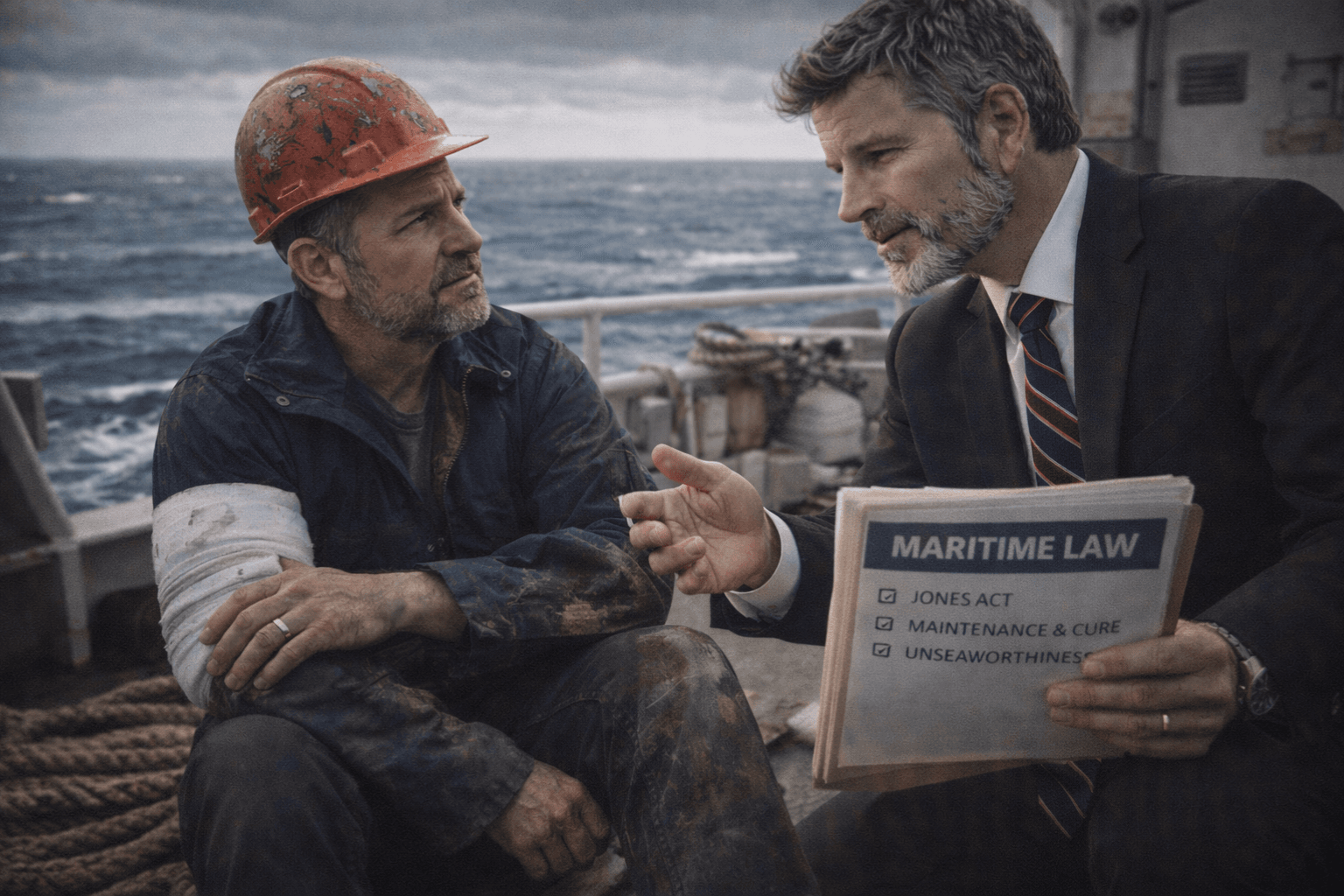
Jones Act Lawyer: Seaman Injury Claims & Maritime Negligence
A Jones Act Lawyer provides the specialized technical expertise required to navigate the unique protections afforded to maritime workers under federal law. Unlike standard land-based workers' compensation, the Jones Act allows seamen to sue for employer negligence and recover damages for unseaworthiness and maintenance and cure. The core framework covers maritime negligence claims, the unseaworthiness doctrine, maintenance and cure benefits, and federal maritime injury law. Case planning follows civil litigation timelines, the statute of limitations, and the discovery process under applicable evidence rules. A strong record uses qualified expert witnesses, transparent contingency fee terms, a defensible demand letter, disciplined settlement negotiation, and realistic trial preparation planning with mediation as needed.
This overview explains how jones act lawyer considerations shape evidence, liability, and recovery planning.
The guide provides structured analysis of legal framework, liability analysis, evidence handling, insurance structure, damages valuation, and procedure timeline, with decision trees, definitions, and compliance checklists.
The focus remains on U.S. maritime jurisdiction and federal court standards.
Each section is designed for audit-ready compliance and litigation preparation.
Legal Framework
The Jones Act provides seamen with a federal negligence cause of action against maritime employers. Claims also intersect with general maritime law, including maintenance and cure and unseaworthiness. Jurisdictional rules include federal admiralty jurisdiction and choice of law principles tied to maritime activity.
Admiralty jurisdiction and the saving-to-suitors clause shape forum selection and procedural options. These rules affect jury availability, removal strategy, and the interplay between state and federal courts in maritime cases.
Statutory Foundations
The Jones Act is codified in federal law and incorporates a negligence standard with a low causation threshold. The statute applies to qualifying seamen and requires proof of employer negligence that played a role in the injury.
Seaman Status Criteria
Seaman status is a threshold issue. Courts evaluate the worker's connection to a vessel in navigation and the substantial nature of that connection in duration and function.
Employer Duty and Breach
Employer duty includes providing a reasonably safe place to work, proper training, safe equipment, and competent supervision. Breach includes unsafe procedures, improper staffing, or defective equipment.
Proof Thresholds
Proof thresholds require evidence of negligence and causation, along with seaman status. Causation is lighter than common law negligence, yet still requires a factual link between breach and injury.
Definitions and Key Terms
The Term refers to jones Act. Definition: Federal statute allowing seamen to sue employers for negligence. Practical Use: Basis for federal maritime claims. The Term refers to seaman status. Definition: Worker status tied to a vessel in navigation. Practical Use: Threshold eligibility issue. The Term refers to maintenance and cure. Definition: Maritime duty to pay medical care and basic living. Practical Use: Separate cause of action. The Term refers to unseaworthiness. Definition: Vessel condition that is not reasonably fit. Practical Use: Strict liability claim. The Term refers to admiralty jurisdiction. Definition: Federal jurisdiction over maritime claims. Practical Use: Determines forum and procedure.
Official Sources and Compliance Checks
Use official federal sources for statutes, agency rules, and court guidance.
U.S. Code U.S. Courts directory U.S. Department of Labor OWCP OSHA maritime safetyLiability Analysis
Liability analysis in Jones Act cases focuses on employer negligence, seaman status, and causation. Claims often run in parallel with unseaworthiness and maintenance and cure obligations.
Liability Elements Framework
Confirm seaman status and vessel connection. Identify employer duty and breached safety obligations. Establish negligence and causation under Jones Act standards. Evaluate unseaworthiness and maintenance and cure overlap. Document damages with medical and economic records.
Liability Evidence Matrix
The Evidence Type refers to vessel logs. Liability Use: Work assignments and conditions. Typical Source: Vessel records. The Evidence Type refers to safety manuals. Liability Use: Employer procedures and standards. Typical Source: Employer records. The Evidence Type refers to incident reports. Liability Use: Injury event details. Typical Source: Employer or vessel logs. The Evidence Type refers to medical records. Liability Use: Causation and treatment. Typical Source: Treating providers. The Evidence Type refers to witness statements. Liability Use: Condition and negligence proof. Typical Source: Crew or supervisors.
Common Defenses
Common defenses include comparative fault, lack of seaman status, and disputes over causation. Employers also contest maintenance and cure obligations when they allege non-work-related conditions.
Comparative Fault Allocation Table
The Fault Allocation refers to 0%. Damages Outcome: Full recovery. Practical Effect: No reduction in damages. The Fault Allocation refers to 20%. Damages Outcome: 80% recovery. Practical Effect: Reduction proportional to fault. The Fault Allocation refers to 50%. Damages Outcome: 50% recovery. Practical Effect: Substantial reduction. The Fault Allocation refers to 80%. Damages Outcome: 20% recovery. Practical Effect: Minimal recovery remaining.
Evidence Handling
Evidence handling in maritime cases requires preservation of vessel records, equipment condition, and medical documentation. Maritime employers often control key evidence, so preservation demands should be issued early.
Incident Reporting and Regulatory Records
Incident reporting records strengthen timelines and corroborate injury circumstances. Reports to vessel operators, port authorities, or federal maritime regulators create official records that align with vessel logs and crew statements. These records also show whether the employer followed internal reporting protocols.
Reporting Records Table
The Record Type refers to incident report. Purpose: Captures event facts and initial response. Typical Custodian: Employer safety office. The Record Type refers to vessel log entry. Purpose: Documents operational conditions. Typical Custodian: Vessel master or officer. The Record Type refers to medical log. Purpose: Notes onboard treatment and referrals. Typical Custodian: Ship medical officer. The Record Type refers to safety meeting record. Purpose: Shows pre-incident hazard discussions. Typical Custodian: Employer safety team.
Reporting Consistency Review
Reporting consistency review compares incident narratives across logs, statements, and medical notes. Inconsistencies should be flagged and resolved through follow-up interviews and document requests. A consistency map supports credibility and strengthens causation analysis.
A timeline index should list report dates, author roles, and distribution to supervisors. This index helps verify notice timing and supports spoliation arguments when records disappear.
This reduces timeline disputes.
Evidence Collection Checklist
Vessel logs and duty rosters. Safety manuals and training records. Incident reports and internal investigations. Medical records and treatment summaries. Photographs of the vessel and equipment.
Chain of Custody and Integrity
Maintain chain of custody for physical evidence and digital records. Preserve metadata for photos and electronic logs.
Seaman Status Evidence
Seaman status evidence includes employment records, voyage logs, job duties, and vessel assignments. A status timeline should show substantial connection to the vessel.
Medical and Causation Documentation
Medical and causation documentation should include emergency care records, specialist evaluations, imaging results, and work status restrictions. A causation summary should align medical findings with incident timelines and vessel conditions.
Maintenance and Cure Protocol
Maintenance and cure claims require prompt documentation of medical needs and living expenses. A protocol should track treatment recommendations, travel costs for medical care, and daily maintenance rates. Documentation should include medical directives, receipts, and employer correspondence.
Maintenance and Cure Dispute Triggers
Dispute triggers include refusal to authorize care, premature termination of benefits, and reliance on biased medical reviews. A dispute log should capture dates, communications, and the medical basis for continued care.
Insurance Structure
Insurance structure in maritime cases includes employer protection and indemnity coverage, vessel liability policies, and excess coverage. Coverage disputes shape settlement posture.
Coverage Layers
Protection and indemnity coverage for employer liability. Hull and machinery coverage for vessel-related issues. Umbrella or excess coverage for catastrophic losses.
Coverage Investigation Protocol
Coverage investigation requires identification of all applicable maritime policies and endorsements.
Request policy declarations and endorsements. Confirm coverage limits and exclusions. Identify notice requirements and reporting duties. Document reservation of rights letters.
Coverage Dispute Focus
Coverage disputes often involve employer status, vessel classification, and policy exclusions. A coverage map should identify all insured entities and insured vessels to avoid missed coverage.
Damages Valuation
Damages valuation in Jones Act cases includes medical costs, wage loss, and non-economic damages. Maintenance and cure benefits also form a separate component of recovery.
Valuation Documentation Protocol
Valuation documentation should include payroll records, vessel schedules, and union pay data where applicable. A structured protocol supports wage loss modeling and future earning capacity analysis.
Damages Categories Table
The Category refers to medical expenses. Core Proof: Treatment records and bills. Valuation Notes: Include past and future care. The Category refers to lost income. Core Proof: Payroll and wage records. Valuation Notes: Document time off and capacity loss. The Category refers to pain and suffering. Core Proof: Medical notes and impact statements. Valuation Notes: Tie to functional impairment. The Category refers to maintenance and cure. Core Proof: Receipts and medical directives. Valuation Notes: Separate maritime obligation. The Category refers to loss of earning capacity. Core Proof: Economic expert analysis. Valuation Notes: Use maritime wage data.
Valuation Adjustment Factors
Adjustment factors include severity of injury, expected recovery timeline, and work-life expectancy. Maritime wage structures often require specialized economic analysis.
Procedure Timeline
Procedure timing in Jones Act cases depends on federal limitations periods, venue selection, and local court scheduling orders. Maritime claims proceed in state or federal court depending on the pleading posture.
Immediate medical care and incident reporting. Evidence preservation and vessel inspection. Maintenance and cure demand and documentation. Claim filing in state or federal court. Discovery and depositions. Expert disclosure and motion practice. Mediation and settlement evaluation. Trial preparation and verdict strategy.
Mediation and Settlement Strategy
Mediation preparation should include a liability summary, seaman status evidence, maintenance and cure records, and a damages valuation model. Settlement strategy should address employer defenses and coverage limits to support realistic negotiation positions.
Venue and Forum Selection
Venue selection depends on employer location, vessel operations, and injury location. Forum analysis should consider jury pools, procedural rules, and maritime precedent.
Decision Tree
Use this decision tree to evaluate claim viability and strategy.
The Decision Point refers to is seaman status established?. Yes Path: Proceed with Jones Act claims. No Path: Evaluate alternative maritime remedies. The Decision Point refers to is employer negligence supported?. Yes Path: Build negligence record. No Path: Focus on unseaworthiness claims. The Decision Point refers to are maintenance and cure obligations unmet?. Yes Path: Document and demand benefits. No Path: Track compliance and disputes. The Decision Point refers to is coverage confirmed?. Yes Path: Prepare valuation and demand. No Path: Investigate additional policies. The Decision Point refers to are damages significant?. Yes Path: Retain experts and build valuation. No Path: Limit costs to core proof.
Evidence Handling - Maritime Workflow
Evidence workflow should align with maritime employer controls and federal procedure.
Secure vessel logs and duty assignments. Preserve equipment and inspection records. Document medical care and treatment timeline. Collect wage records and employment history. Maintain an exhibit disclosure log.
Damages Valuation - Maritime Application
Damages valuation in maritime cases requires alignment with vessel schedules, offshore rotations, and contract wage rates. A structured valuation model should integrate overtime, hazard pay, and per diem components.
Claim Evaluation Framework
Use this framework to assess claim viability and litigation readiness.
Confirm seaman status and vessel connection. Identify all potential defendants and policies. Preserve vessel evidence and medical documentation. Evaluate negligence and unseaworthiness overlap. Build damages model with maritime wage data. Set a procedure timeline with key deadlines.
Maritime Employer Investigation
Employer investigation focuses on corporate structure, vessel ownership, and operational control. These records establish the correct defendant entities and support coverage identification. Corporate filings, charter agreements, and management records should be preserved early.
Procedural Checklist
Procedural compliance requires attention to filing deadlines, service rules, and discovery obligations. A checklist reduces missed deadlines and supports consistent litigation management.
Confirm jurisdiction and venue. File within federal limitations period. Serve all employer entities and vessel owners. Preserve evidence and issue holds. Track disclosure deadlines and expert reports.
Claim Evaluation Framework
Use this framework to assess claim viability and litigation readiness.
Confirm seaman status and vessel connection. Identify all potential defendants and policies. Preserve vessel evidence and medical documentation. Evaluate negligence and unseaworthiness overlap. Build damages model with maritime wage data. Set a procedure timeline with key deadlines.
Expert Evidence Planning
Expert evidence planning supports causation and damages disputes. Maritime safety experts address vessel conditions, while medical experts connect injuries to the event. Economic experts quantify wage loss and future care costs.
Expert Planning Table
The Expert Type refers to maritime safety. Trigger: Disputed vessel condition. Core Output: Safety and causation report. The Expert Type refers to medical expert. Trigger: Causation or severity disputes. Core Output: Medical causation report. The Expert Type refers to economic expert. Trigger: Significant wage loss or future care. Core Output: Loss model and projections.
Preservation Letters and Evidence Holds
Preservation letters should be sent to employers, vessel operators, and third-party contractors. Letters should request retention of logs, maintenance records, incident reports, and electronic data. A documented preservation log supports later spoliation motions.
Insurance Structure - Maritime Considerations
Maritime insurance rules affect protection and indemnity coverage, exclusions, and reporting obligations. Policy interpretation depends on federal maritime law and policy language.
Coverage Review Checklist
Obtain declarations and endorsements. Verify protection and indemnity limits. Identify exclusions for specific operations. Confirm notice requirements and cooperation clauses.
State Rule Matrix - Jones Act Lawyer: Seaman Injury Claims & Maritime Negligence
Although governed by federal law, local court rules and venue practices affect Jones Act litigation. The matrix below provides a verification framework.
Verification Table
The Research Step refers to confirm Jones Act applicability. Source Type: Federal statutes and case law. Documentation Goal: Establish seaman eligibility.
The Research Step refers to review maritime negligence standards. Source Type: Federal case law. Documentation Goal: Set proof requirements.
The Research Step refers to check maintenance and cure rules. Source Type: Federal maritime law. Documentation Goal: Confirm benefit scope.
The Research Step refers to identify venue and local rules. Source Type: Court rules. Documentation Goal: Set filing and scheduling rules.
The Research Step refers to confirm limitations period. Source Type: Federal statutes. Documentation Goal: Set filing deadline.
JusticeFinder internal references for further research:
Summary
Expert guide on maritime law. Learn how a Jones Act lawyer handles seaman injury claims, unseaworthiness, and maintenance and cure recoveries under federal m...
Quick Legal Answer: What this guide covers
Expert guide on maritime law. Learn how a Jones Act lawyer handles seaman injury claims, unseaworthiness, and maintenance and cure recoveries under federal m...
Quick Legal Answer: Core legal focus
This guide focuses on jones act lawyer within legal process and the evidence, timelines, and standards typically evaluated under U.S. law.
Quick Legal Answer: When to verify with counsel
Because statutes and rules vary by state, confirm the specifics for your jurisdiction with a qualified attorney or official government resources.
Key Takeaways
- Understand the core rules and evidence standards tied to jones act lawyer.
- Track deadlines and procedural steps that shape recovery options.
- Document medical records, liability proof, and insurance communications early.
- Compare settlement posture with litigation risk based on the case record.
Maritime cases often require specialized testimony; see our guide on Expert Witnesses for more on technical evidence.
Final Checklist
Confirm seaman status and vessel connection. Preserve vessel and incident evidence. Document medical treatment and maintenance and cure needs. Identify all insurance policies and limits. Evaluate negligence and unseaworthiness overlap. Calculate damages with maritime wage data. Prepare demand package and evidence index. Track federal limitations deadlines. Align strategy with maritime venue rules. Prepare for mediation and trial timelines.
Related Resources
For broader context, review the Legal Process hub.
Related Guides
- Birth Injury Lawyer: Cerebral Palsy & Medical Malpractice Guide
- Can I Sue After Workers Compensation? Third-Party Liability Explained
- Catastrophic Injury Settlements: Life Care Plans & Million-Dollar Claims
Pillar guide: Contingency Fee Agreements: 33-40% Standard & Hidden Costs
Helpful Tool
Use the Attorney Communication Log Google Sheets to organize documentation, expenses, and insurance claim records while applying this guide.
More Legal Process Guides

Motorcycle Injury Lawyer: The Ultimate Hiring Guide (USA)
The ultimate national guide to hiring a motorcycle injury lawyer. Evaluate investigation capacity, trial readiness, and expert networks for any US motorcycle...
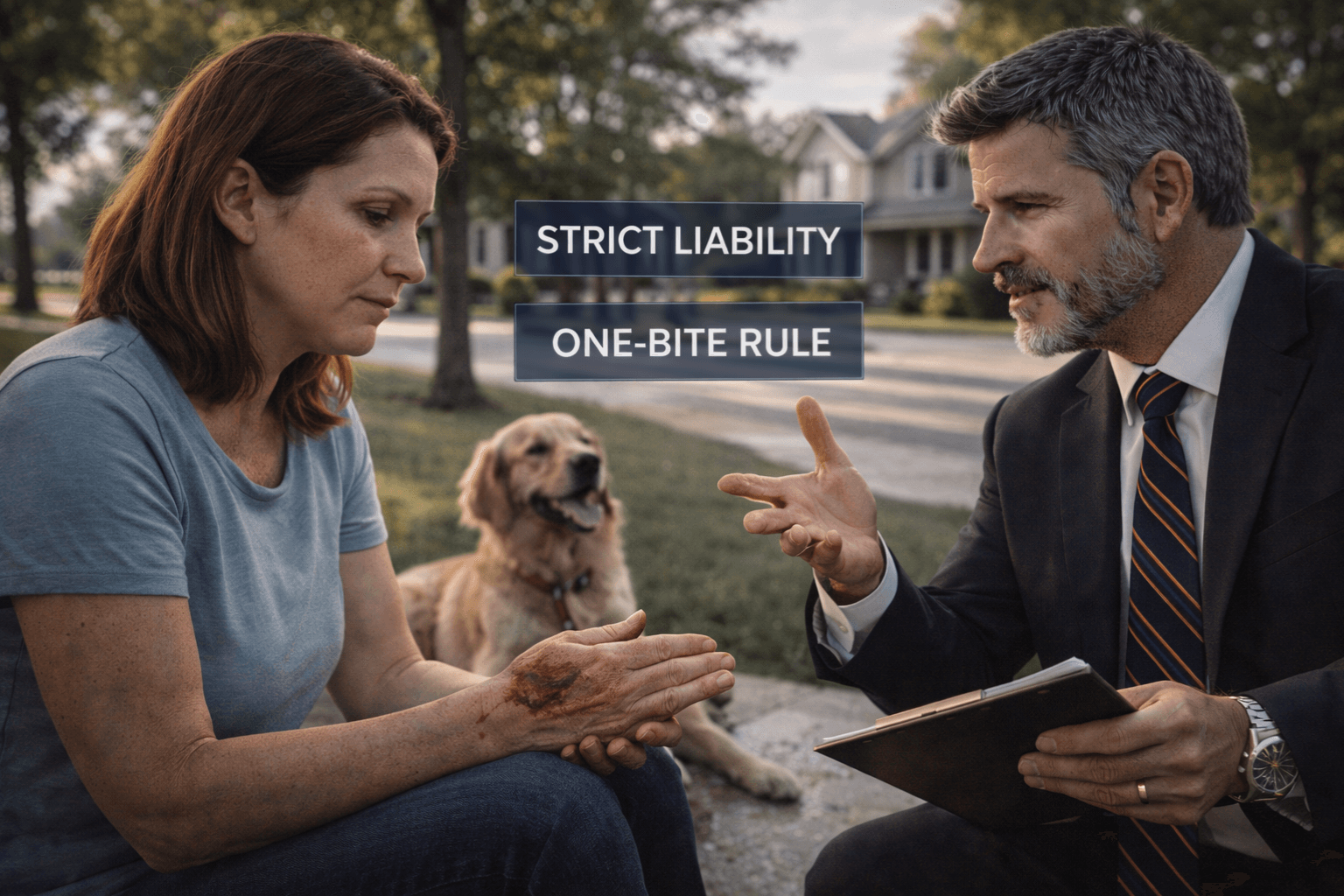
Dog Bite Lawyer: Strict Liability vs One-Bite Rule by State
Understand dog bite laws across the U.S. Comparison of strict liability vs. the one-bite rule and how to navigate animal attack insurance claims. Read our co...

Catastrophic Injury Settlements: Life Care Plans & Million-Dollar Claims
Catastrophic Injury Settlements guide to life care plans, liability analysis, evidence, insurance, damages, and U.S. legal procedure. Read our comprehensive ...

Contingency Fee Agreements: 33-40% Standard & Hidden Costs
Master contingency fee percentages (33-40%) and identify hidden legal costs. Learn how lawyer fees affect your total settlement recovery in U.S. injury cases.

Spinal Cord Injury Lawyer: Compensation & Lifetime Care Guide
Authority guide to Spinal Cord Injury Lawyer practice under U.S. law, focused on neurological damage levels, ASIA scale, and life care planning. Read our com...

Premises Liability Lawyer: Store Injuries, Negligent Security & Slip and Fall
Authority guide to Premises Liability Lawyer practice for store injuries, negligent security, and slip and fall claims under U.S. law. Read our comprehensive...
Related Documentation Tools
View all toolsThese free spreadsheets help organize evidence, deadlines, and claim documentation for this topic.
Personal Injury Statute of Limitations Tracker Google Sheets
Keep legal timing visible so filing and response windows are not missed with Claim Overview and State SOL Reference before you share records with an insurer or attorney.
Personal Injury Expense and Damages Tracker Google Sheets
Track income disruption with records adjusters and attorneys can review quickly with Claim Overview and Economic Damages before you share records with an insurer or attorney.
Personal Injury Case Preparation Checklist Google Sheets
Build a timestamped evidence file that keeps facts consistent with Case Overview and Case Checklist before you share records with an insurer or attorney.
Settlement Demand Letter Organizer Google Sheets
Estimate negotiable case value and keep damages evidence aligned with Claim Overview and Economic Damages before you share records with an insurer or attorney.