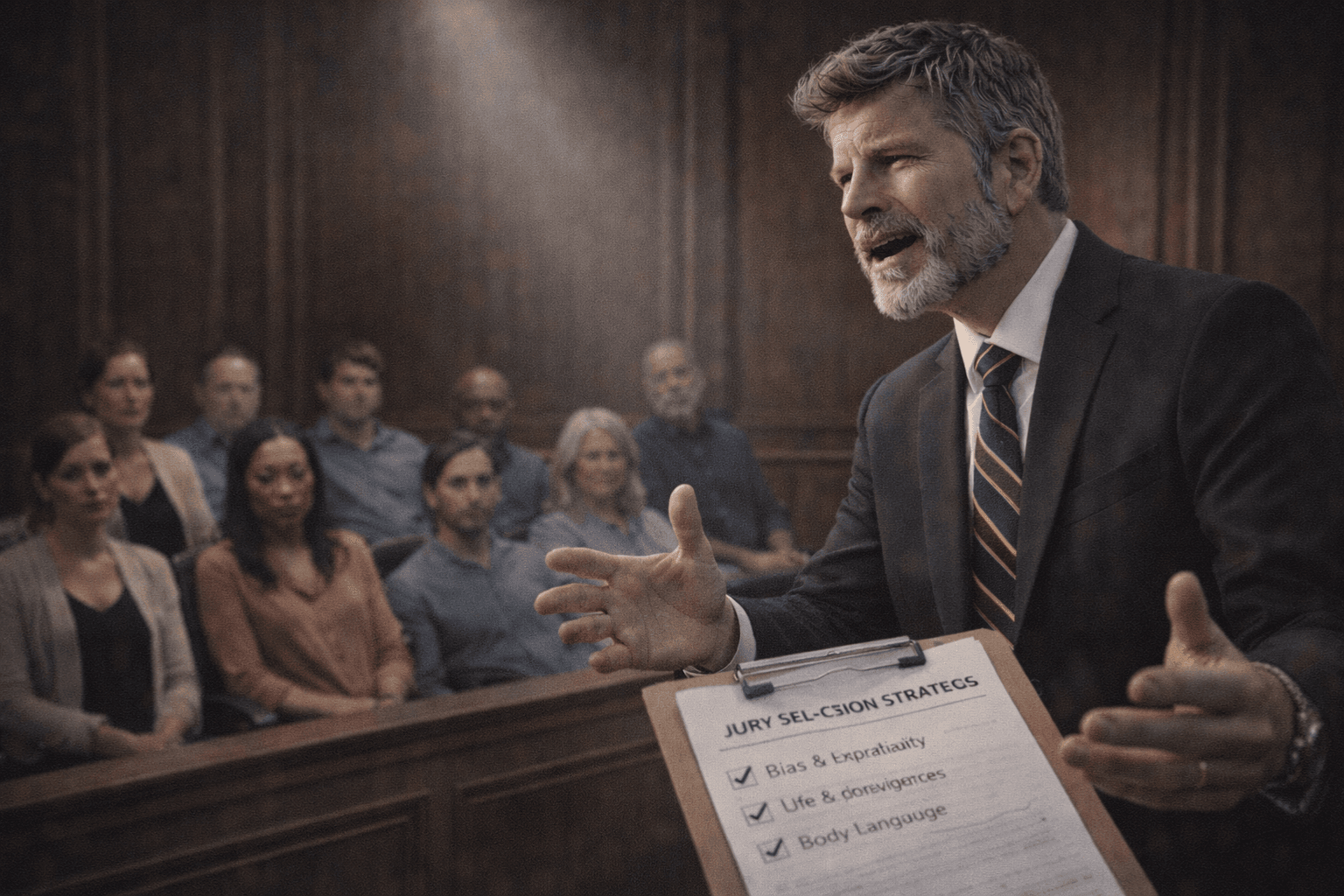
Opening Statements & Closing Arguments: Trial Advocacy for Maximum Verdicts
opening statements and closing arguments
Opening Statements and Closing Arguments define the evidentiary boundaries of a civil trial, where advocacy meets the strict rules of procedure. This guide explains how trial strategy aligns with courtroom procedure and verdict framing. The analysis sits within civil litigation timelines, the statute of limitations, and the discovery process governed by evidence rules. A complete record uses qualified expert witnesses, aligns contingency fee terms with a defensible demand letter, and tracks settlement negotiation posture against trial preparation and mediation or arbitration paths.
This overview explains how opening statements and closing arguments considerations shape evidence, liability, and recovery planning.
Legal Framework for Opening Statements & Closing Arguments
Opening Statements & Closing Arguments: Constitutional and Statutory Sources
U.S. trial advocacy rests on constitutional trial rights, statutory procedure, and court rules. Due process, confrontation, and the right to counsel govern structure and fairness. Federal and state rules of civil procedure provide timing, scope, and evidentiary boundaries for jury presentation. For federal courts, consult the U.S. Courts rules pages and the Federal Rules of Evidence on the judiciary website: U.S. Courts Rules and Federal Rules of Evidence.
Federal practice also relies on pattern jury instructions and district-specific trial management orders. State courts adopt parallel structures through state evidence codes and court rules. The appellate record is shaped by what counsel states in opening, how objections are handled, and how closing arguments track the instructions provided to the jury.
The U.S. Courts overview on federal courts provides a structural map of trial and appellate review: About Federal Courts.
Opening Statements & Closing Arguments: Court Rules and Local Practice
Local rules define time limits, demonstrative use, pretrial disclosures, and motion practice. Each district or state court issues local rules and trial orders that govern how counsel presents openings and closings.
Opening Statements & Closing Arguments: Standing Orders and Scheduling Orders
Trial courts issue standing orders that require exhibits to be marked, demonstratives exchanged, and limiting issues framed before trial. These orders often set time allocations and define what a party is authorized to present in opening or closing.
Opening Statements & Closing Arguments: Judge-Specific Requirements
Judge-specific practices govern bench conferences, juror notebooks, and the treatment of deposition excerpts. Compliance with those directives protects credibility and preserves the record for review.
Opening Statements & Closing Arguments: Definitions for the Record
Opening statement: A roadmap of admissible proof and the logical theory of the case, delivered before evidence. It is not argument and must align with expected evidence.
Closing argument: A synthesis of admitted evidence and jury instructions, delivered after evidence. It connects proof to verdict forms and requested relief.
Trial theme: A concise, case-anchored narrative statement that links facts to legal elements.
Proof frame: The ordered presentation of evidence elements aligned to jury instructions.
Opening Statements & Closing Arguments: Opening vs Closing Functions Table
The Function refers to purpose. Opening Statement: Roadmap of admissible proof. Closing Argument: Synthesis of admitted evidence. Record Risk: Misstatement of record. The Function refers to timing. Opening Statement: Before evidence. Closing Argument: After evidence and instructions. Record Risk: Extra-record reference. The Function refers to tone. Opening Statement: Descriptive and structured. Closing Argument: Analytical and verdict focused. Record Risk: Improper persuasion. The Function refers to source. Opening Statement: Expected evidence. Closing Argument: Admitted evidence and instructions. Record Risk: Objection sustained.
Opening Statements & Closing Arguments: Authority Checklist
Confirm federal or state procedural rule set Review local rules and standing orders Identify jury instruction sources Build an element-by-element proof map Align opening content to admissibility plan
Opening Statements & Closing Arguments: Authority Map Table
Constitution. U.S. Due process, confrontation. Fair presentation boundaries. Risk if. Reversible error
Statutes. U.S. Procedure and evidence statutes. Timing and scope limits. Risk if. Sanctions or exclusion
Court rules. U.S. Federal and state rules. Opening and closing boundaries. Risk if. Objections sustained
Local rules. U.S. District or county orders. Demonstrative handling. Risk if. Stricken content
Judge orders. U.S. Standing or trial orders. Exhibit use and timing. Risk if. Loss of credibility
Opening Statements & Closing Arguments: U.S. Courts and Federal Agencies
U.S. courts and agencies publish litigation guidance. Reference the U.S. Courts site for federal procedure and the Department of Justice manual for federal litigation practices: Justice Manual. For public safety data that informs damages framing, federal data sets from NHTSA remain a core resource.
Liability Analysis for Opening Statements & Closing Arguments
Opening Statements & Closing Arguments: Element-by-Element Proof Alignment
Liability analysis in opening tracks each element of the cause of action. The opening organizes each element into a proof chapter, tied to admissible evidence and the expected order of witnesses. Closing then binds each element to admitted exhibits and testimony.
Element mapping should reflect the verdict form structure. Special verdicts demand discrete proof for each question. General verdicts require a cohesive narrative that still preserves the element proof in the record. This is vital for appellate review and post-trial motions.
Opening Statements & Closing Arguments: Burden Allocation Matrix
Opening Statements & Closing Arguments: Comparative Fault and Allocation
Opening addresses allocation theories with a structured sequence: identify the fault theory, anchor it to anticipated evidence, and tie it to the verdict form categories. Closing applies the jury instructions to the evidence record and identifies the allocation supported by admitted proof.
Where joint and several liability remains in effect, the closing must show how each defendant’s conduct satisfies each element. Where comparative fault rules apply, closing must align the allocation request to the instruction and the evidence record, including admissions, expert analysis, and time-sequenced events.
Opening Statements & Closing Arguments: Standard of Review Preservation
Closing argument preserves appellate positions by connecting arguments to admitted evidence and jury instructions. This includes showing where proof appears in the record and avoiding extra-record appeals.
Preservation also depends on timely objections and a clear record. Counsel should articulate the legal basis for objections, request curative instructions when required, and note any disputed rulings for the record. This discipline shapes the standard of review and the scope of appellate analysis.
Evidence Handling for Opening Statements & Closing Arguments
Opening Statements & Closing Arguments: Pretrial Control Points
Evidence handling begins before trial. Motions in limine, exhibit lists, and witness sequences control what enters the record and what counsel is authorized to mention in opening. Every statement in opening must track expected admissible evidence.
Relevance and prejudice control admissibility boundaries. Rule 401 defines relevance; Rule 403 allows exclusion for unfair prejudice, confusion, or waste of time. These standards shape how evidence is framed in opening and how it is later argued in closing.
Opening Statements & Closing Arguments: Admissibility Checklist
To admit Medical records to be admissible, it must meet the, counsel must satisfy the Business records rule as verified by the through the Custodian or expert; addressing; resolving Redactions is crucial for its is essential for Mention only if admitted.
Video footage to be admissible, it must meet the requires a foundation based on Authentication as verified by the, verified by the Recording witness; addressing, while addressing Chain of custody is crucial for its to secure its Preview only if admitted.
Expert report to be admissible, it must meet the requires a foundation based on Rule on expert disclosure as verified by the, verified by the Expert testimony; addressing, while addressing Scope limits is crucial for its to secure its Describe analysis, not report.
Photographs to be admissible, it must meet the requires a foundation based on Authentication as verified by the, verified by the Photographer or custodian; addressing, while addressing Relevance is crucial for its to secure its Describe scene and timing.
Opening Statements & Closing Arguments: Demonstratives and Exhibits
Demonstratives require advance exchange. Use them only when permitted by court orders and when a foundation witness is ready to place the exhibit into the record. Closing uses admitted exhibits and properly noticed demonstratives.
Exhibit control plans should include numbering, foundation witness identification, and a record reference for each offer. This creates a straight path from evidence admission to closing synthesis.
Opening Statements & Closing Arguments: Objection-Ready Structure
Structure each segment with a proof link. If an objection occurs, the record already ties the statement to evidence. This reduces the chance of a sustained objection that interrupts credibility.
Opening Statements & Closing Arguments: Evidence Sequence Table
The Step refers to 1. Evidence Task: Pre-mark exhibits. Timing: Pretrial. Record Goal: Orderly admission record. The Step refers to 2. Evidence Task: Lay foundations. Timing: Direct examination. Record Goal: Authentication and relevance. The Step refers to 3. Evidence Task: Address limitations. Timing: Sidebars or bench conferences. Record Goal: Preserve rulings. The Step refers to 4. Evidence Task: Admit exhibits. Timing: During witness testimony. Record Goal: Clear exhibit status. The Step refers to 5. Evidence Task: Use admitted exhibits in closing. Timing: After evidence closes. Record Goal: Record-accurate synthesis.
Insurance Structure for Opening Statements & Closing Arguments
Opening Statements & Closing Arguments: Coverage Layers and Trial Limits
Civil trials often involve layered insurance. The opening must avoid improper references to insurance where barred, yet still preserve the proof of responsibility and damages. Counsel should track state rules on insurance admissibility and limits on references to indemnity.
Insurance structure also intersects with indemnity agreements and risk transfer contracts. Counsel should coordinate with trial orders to ensure references remain within admissibility limits while maintaining proof of liability and damages.
Opening Statements & Closing Arguments: Policy Limits and Settlement Context
Closing must focus on admissible damages evidence, not settlement positions. Evidence related to settlement or insurance is typically excluded; keep damage proof linked to records and expert valuation.
Opening Statements & Closing Arguments: Subrogation and Liens
Economic damages often face liens and reimbursement interests. Closing should describe gross damages and avoid non-record lien reductions unless admitted and permitted by court order.
Liens and reimbursement often involve statutory or contractual claims. Their treatment at trial depends on state law and court orders. Counsel should maintain a separate post-verdict plan for lien resolution to avoid improper argument before the jury.
Damages Valuation for Opening Statements & Closing Arguments
Opening Statements & Closing Arguments: Damages Frameworks
Damages should be organized into economic, non-economic, and, where authorized, punitive categories. Each category must map to admitted evidence and applicable jury instructions.
Economic damages require reliable documentation, a time-ordered narrative, and expert support for future costs. Non-economic damages require consistent testimony, corroborating witnesses, and demonstrative evidence that remains within the record. Punitive damages require proof of culpable conduct aligned to the legal threshold in the jurisdiction.
Opening Statements & Closing Arguments: Valuation Table
The Damages Type refers to medical expenses. Evidence Sources: Bills, coding summaries. Expert Role: Medical expert. Closing Structure: Past costs with record citations. The Damages Type refers to future care. Evidence Sources: Life-care plan. Expert Role: Planner, economist. Closing Structure: Time-based projection. The Damages Type refers to lost earnings. Evidence Sources: Payroll, tax records. Expert Role: Economist. Closing Structure: Earnings trajectory. The Damages Type refers to pain and suffering. Evidence Sources: Testimony, journals. Expert Role: None or clinical. Closing Structure: Human impact narrative. The Damages Type refers to property loss. Evidence Sources: Repair records. Expert Role: Appraiser. Closing Structure: Replacement and depreciation.
Opening Statements & Closing Arguments: Non-Economic Boundaries
Non-economic damages require a disciplined narrative tied to testimony and exhibits. Use specific episodes, documented limitations, and credible witness testimony.
Non-economic narratives should track duration, intensity, and daily impact. Keep the narrative anchored to admitted testimony, medical records, and documented life changes.
Opening Statements & Closing Arguments: Punitive Thresholds
Punitive damages depend on state law standards and admissible evidence of culpable conduct. Opening should frame punitive eligibility only if the court has allowed the issue for trial.
Punitive instructions often require clear and convincing proof, separate phases, or bifurcation. Counsel should align opening and closing statements to the applicable procedural structure and avoid references outside the authorized phase.
Procedure Timeline for Opening Statements & Closing Arguments
Opening Statements & Closing Arguments: Pretrial to Verdict Sequence
Pleadings and initial disclosures Discovery and expert disclosures Motions in limine and exhibit lists Final pretrial conference and trial order Jury selection and opening statement Plaintiff case-in-chief and defense case Closing argument and jury instructions Verdict form completion and entry of judgment
The timeline also includes settlement conferences, expert challenges, and pretrial evidentiary hearings. These steps define what evidence reaches the jury and shape the structure of opening and closing statements.
Opening Statements & Closing Arguments: Timing Control Table
Phase During the requires a focus on Opening, the to ensure After jury selection focuses on the and avoid Roadmap of admissible proof to prevent.
Phase During the requires a focus on Direct, the to ensure During case-in-chief focuses on the and avoid Establish elements to prevent.
Phase During the requires a focus on Cross, the to ensure During opponent case focuses on the and avoid Test credibility to prevent.
Phase During the requires a focus on Closing, the to ensure After evidence focuses on the and avoid Align proof to instructions to prevent.
Opening Statements & Closing Arguments: Motion Practice Tie-In
Pretrial motion practice shapes what the jury hears. Motions in limine resolve disputed evidence before trial and provide clarity for opening statements. A disciplined motion plan reduces surprise and preserves the structure of the opening roadmap.
Decision Tree for Opening Statements & Closing Arguments
Opening Statements & Closing Arguments: Decision Criteria List
Evidence relevance and admissibility confirmed Foundation witnesses scheduled in order Demonstratives authorized by order Instruction set reviewed and mapped Verdict form questions aligned to proof
Evidence Handling Deep Dive for Opening Statements & Closing Arguments
Opening Statements & Closing Arguments: Chain of Custody and Authentication
Authentication is required for documents, photographs, and digital evidence. The proof chain should be mapped to witness order. This protects the admissibility pipeline and supports accurate opening previews.
Authentication records should include source, custody, and integrity. Digital evidence requires metadata handling and a clear chain. The opening should describe evidence categories without making promises beyond the foundation plan.
Opening Statements & Closing Arguments: Expert Testimony Controls
Experts require qualified foundations and clear scope. Openings should describe the expert’s analysis, not argue ultimate conclusions not yet in evidence. Closings should tie expert testimony to the relevant jury instruction language.
Expert challenges under reliability standards require careful preparation. If a court limits expert scope, the opening must track that limitation, and the closing must respect the admitted boundaries.
Opening Statements & Closing Arguments: Limiting Instructions
When a court issues limiting instructions, closing must respect those constraints and align with the stated purpose for admitted evidence.
Limiting instructions should be mirrored in the closing structure. This shows respect for the court’s directives and supports verdict integrity.
Professional Conduct and Ethics for Opening Statements & Closing Arguments
Opening Statements & Closing Arguments: Candor and Fair Presentation
Professional conduct rules require candor toward the tribunal, fairness to opposing counsel, and avoidance of misleading statements. The opening must reflect evidence expected in good faith. The closing must remain within the record.
Professional responsibility rules also govern contact with jurors, media statements, and witness preparation. Trial counsel should coordinate with ethical rules to prevent improper influence and preserve a neutral and lawful trial atmosphere.
Opening Statements & Closing Arguments: Misconduct Triggers
Common triggers include personal vouching, appeals to bias, and arguments outside the record. Avoid statements that imply personal knowledge or invoke improper considerations.
Misconduct findings often focus on closing argument language, yet the risk begins in opening. A consistent, evidence-linked structure reduces the risk of judicial intervention.
Practical Frameworks for Opening Statements & Closing Arguments
Opening Statements & Closing Arguments: The Five-Part Framework
Theme sentence tied to legal elements Timeline of core events with evidence anchors Witness roadmap and exhibit highlights Liability and damages pathway Verdict form preview aligned to instructions
Opening Statements & Closing Arguments: Witness Sequence Framework
Liability foundation witness Event witness sequence Expert on causation Damages witness sequence Rebuttal witness plan
Opening Statements & Closing Arguments: Evidence-to-Instruction Map
The Instruction Element refers to duty. Evidence Anchor: Safety standard or statute. Witness: Policy witness. Exhibit: Policy manual. The Instruction Element refers to breach. Evidence Anchor: Act or omission. Witness: Eyewitness. Exhibit: Photo or video. The Instruction Element refers to causation. Evidence Anchor: Event timeline. Witness: Expert. Exhibit: Timeline exhibit. The Instruction Element refers to damages. Evidence Anchor: Records and impact. Witness: Plaintiff. Exhibit: Medical records.
Insurance and Verdict Form Strategy for Opening Statements & Closing Arguments
Opening Statements & Closing Arguments: Verdict Form Architecture
Verdict forms often separate liability and damages. Closing should track each question in order and reference the evidence that supports each answer.
Opening Statements & Closing Arguments: Allocation Categories
Allocation categories must align with the court’s instructions. Improper allocation arguments risk corrective instructions that weaken persuasion.
Allocation strategy should be previewed in opening only when supported by admissible evidence and the expected instruction set. Closing should avoid percentage requests not tied to the verdict form structure.
FAQ for Opening Statements & Closing Arguments
Opening Statements & Closing Arguments: FAQ 1 — What is the purpose of an opening statement?
An opening statement provides a structured roadmap of admissible proof and the legal theory of the case.
Summary
Opening Statements & Closing Arguments guide for U.S. trial advocacy, verdict framing, evidentiary boundaries, and procedure sequencing. Read our comprehensi...
Quick Legal Answer: What this guide covers
Opening Statements & Closing Arguments guide for U.S. trial advocacy, verdict framing, evidentiary boundaries, and procedure sequencing. Read our comprehensi...
Quick Legal Answer: Core legal focus
This guide focuses on opening statements and closing arguments within legal process and the evidence, timelines, and standards typically evaluated under U.S. law.
Quick Legal Answer: When to verify with counsel
Because statutes and rules vary by state, confirm the specifics for your jurisdiction with a qualified attorney or official government resources.
Key Takeaways
- Understand the core rules and evidence standards tied to opening statements and closing arguments.
- Track deadlines and procedural steps that shape recovery options.
- Document medical records, liability proof, and insurance communications early.
- Compare settlement posture with litigation risk based on the case record.
Final Checklist for Opening Statements & Closing Arguments
Opening Statements & Closing Arguments: Trial-Ready Checklist
Opening limited to admissible proof and good-faith expectations Element-by-element proof map aligned to jury instructions Exhibits pre-marked and disclosed per court order Demonstratives approved and exchanged as required Objection response plan tied to evidentiary rules Closing outline aligned to verdict form questions Record citations for each critical proof point Damages calculations supported by admitted records Compliance with local rules and standing orders Ethics review for fair presentation and candor Instruction set verified and mapped to proof Verdict form questions matched to evidence
Internal Resources for Opening Statements & Closing Arguments
Related JusticeFinder resources:
- trial preparation guidance
- personal injury litigation overview
- motorcycle accident case guidance
- civil litigation process
- evidence and records handling
Related Litigation Resources
- Discovery Phase: Personal Injury Discovery & Depositions
Related Resources
For broader context, review the Legal Process hub.
Related Guides
- Birth Injury Lawyer: Cerebral Palsy & Medical Malpractice Guide
- Can I Sue After Workers Compensation? Third-Party Liability Explained
- Catastrophic Injury Settlements: Life Care Plans & Million-Dollar Claims
Pillar guide: Contingency Fee Agreements: 33-40% Standard & Hidden Costs
Helpful Tool
Use the Personal Injury Trial Preparation Checklist Google Sheets to organize documentation, expenses, and insurance claim records while applying this guide.
More Legal Process Guides

Florida Motorcycle Injury Attorney: Tourist & Local Guide
Florida motorcycle accident laws for tourists and residents. Navigating Florida's no-fault system, comparative negligence, and attorney selection. Read our c...
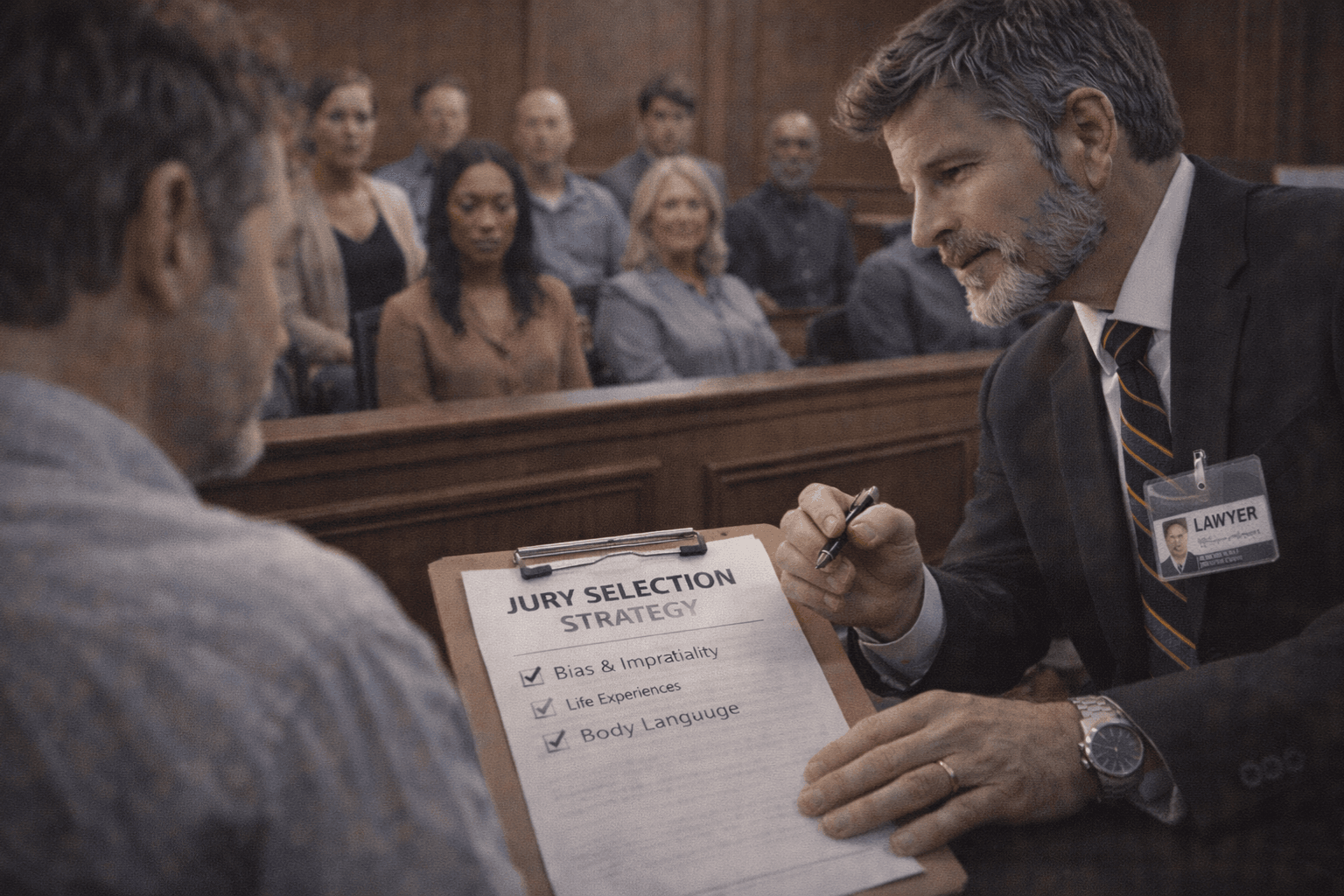
Voir Dire: Jury Selection Strategy for Personal Injury Trials
Authority guide to Voir Dire: Jury Selection Strategy under U.S. law, focused on cause challenges, bias, and juror rehabilitation. Read our comprehensive and...

Slip and Fall Lawyer: Premises Liability & Negligence Guide
Authority guide to Slip and Fall Lawyer practice under U.S. law, focused on premises liability, notice (actual vs. constructive), and evidence. Read our comp...

Personal Injury Statute of Limitations: State-by-State Deadline Guide
Personal Injury Statute of Limitations guide covering U.S. deadline triggers, tolling rules, evidence timing, and filing sequence. Read our comprehensive and...
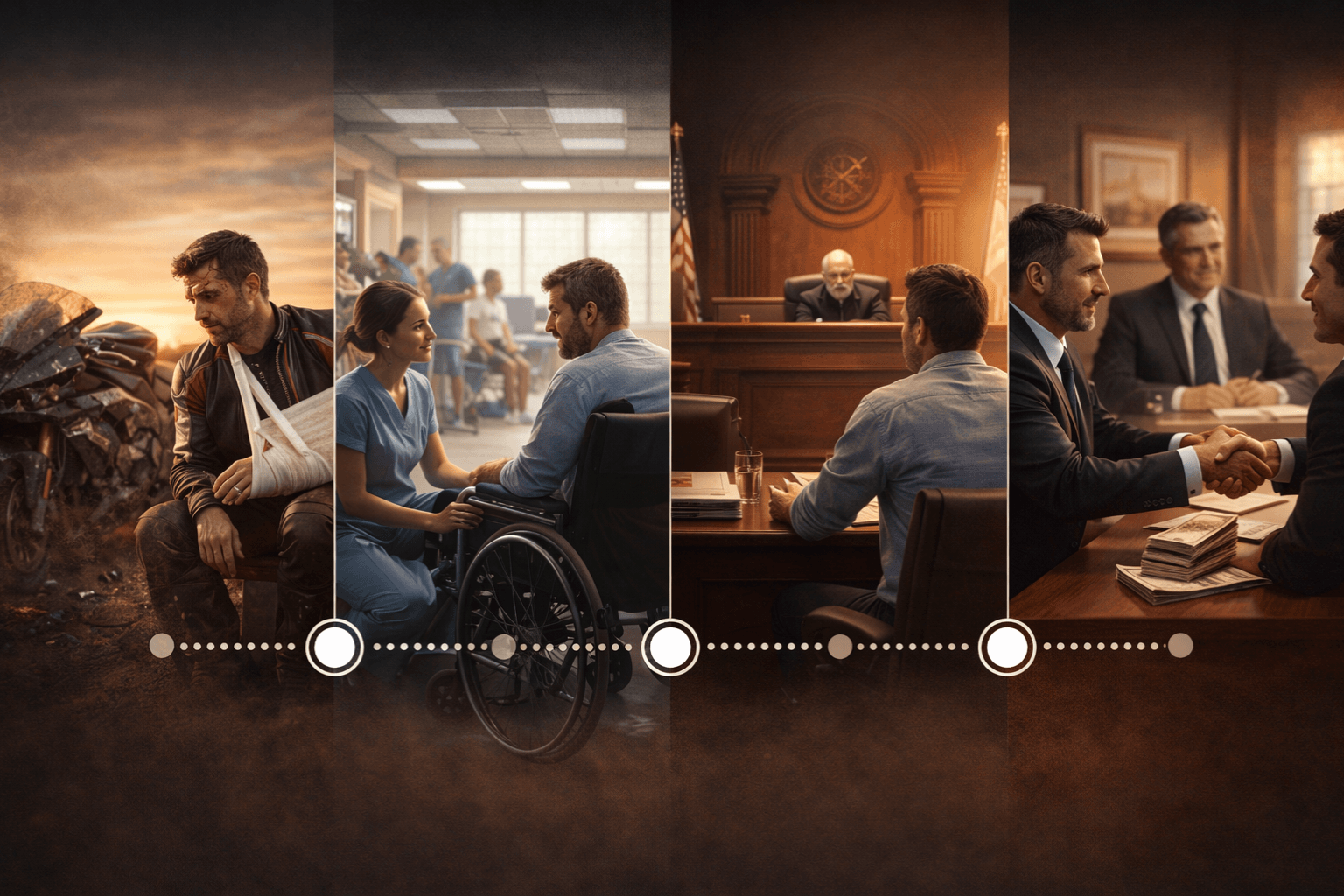
Motorcycle Personal Injury: What to Expect (9-Month Roadmap)
Master the motorcycle injury claim process. A 9-month roadmap from a motorcycle personal injury lawyer covering evidence stabilization, demand planning, and ...

Jones Act Lawyer: Seaman Injury Claims & Maritime Negligence
Expert guide on maritime law. Learn how a Jones Act lawyer handles seaman injury claims, unseaworthiness, and maintenance and cure recoveries under federal m...
Related Documentation Tools
View all toolsThese free spreadsheets help organize evidence, deadlines, and claim documentation for this topic.
Personal Injury Statute of Limitations Tracker Google Sheets
Keep legal timing visible so filing and response windows are not missed with Claim Overview and State SOL Reference before you share records with an insurer or attorney.
Personal Injury Expense and Damages Tracker Google Sheets
Track income disruption with records adjusters and attorneys can review quickly with Claim Overview and Economic Damages before you share records with an insurer or attorney.
Personal Injury Case Preparation Checklist Google Sheets
Build a timestamped evidence file that keeps facts consistent with Case Overview and Case Checklist before you share records with an insurer or attorney.
Settlement Demand Letter Organizer Google Sheets
Estimate negotiable case value and keep damages evidence aligned with Claim Overview and Economic Damages before you share records with an insurer or attorney.