Summary
A guide to oversized load truck accidents, including permitting rules, liability mapping, evidence preservation, and settlement strategy. Read our comprehens...
Quick Legal Answer: What this guide covers
A guide to oversized load truck accidents, including permitting rules, liability mapping, evidence preservation, and settlement strategy. Read our comprehens...
Quick Legal Answer: Core legal focus
This guide focuses on oversized load accident lawyer within truck accident guides and the evidence, timelines, and standards typically evaluated under U.S. law.
Quick Legal Answer: When to verify with counsel
Because statutes and rules vary by state, confirm the specifics for your jurisdiction with a qualified attorney or official government resources.
Key Takeaways
- Understand the core rules and evidence standards tied to oversized load accident lawyer.
- Track deadlines and procedural steps that shape recovery options.
- Document medical records, liability proof, and insurance communications early.
- Compare settlement posture with litigation risk based on the case record.
Oversized Load Accidents
oversized load accident lawyer
Oversized load truck accidents involve special permitting, routing, and safety requirements. These cases differ from typical truck crashes because the load itself introduces additional hazards and regulatory duties. This guide explains how permit violations, escort requirements, and load routing affect liability. A complete file must document FMCSA violations tied to commercial truck liability and trucking company negligence, supported by black box data, ELD logs, and hours of service violations. It should also rule out cargo securement failure, preserve the driver qualification file, and map the truck accident settlement range within commercial insurance layers. Early evidence preservation is essential.
This overview explains how oversized load accident lawyer considerations shape evidence, liability, and recovery planning.
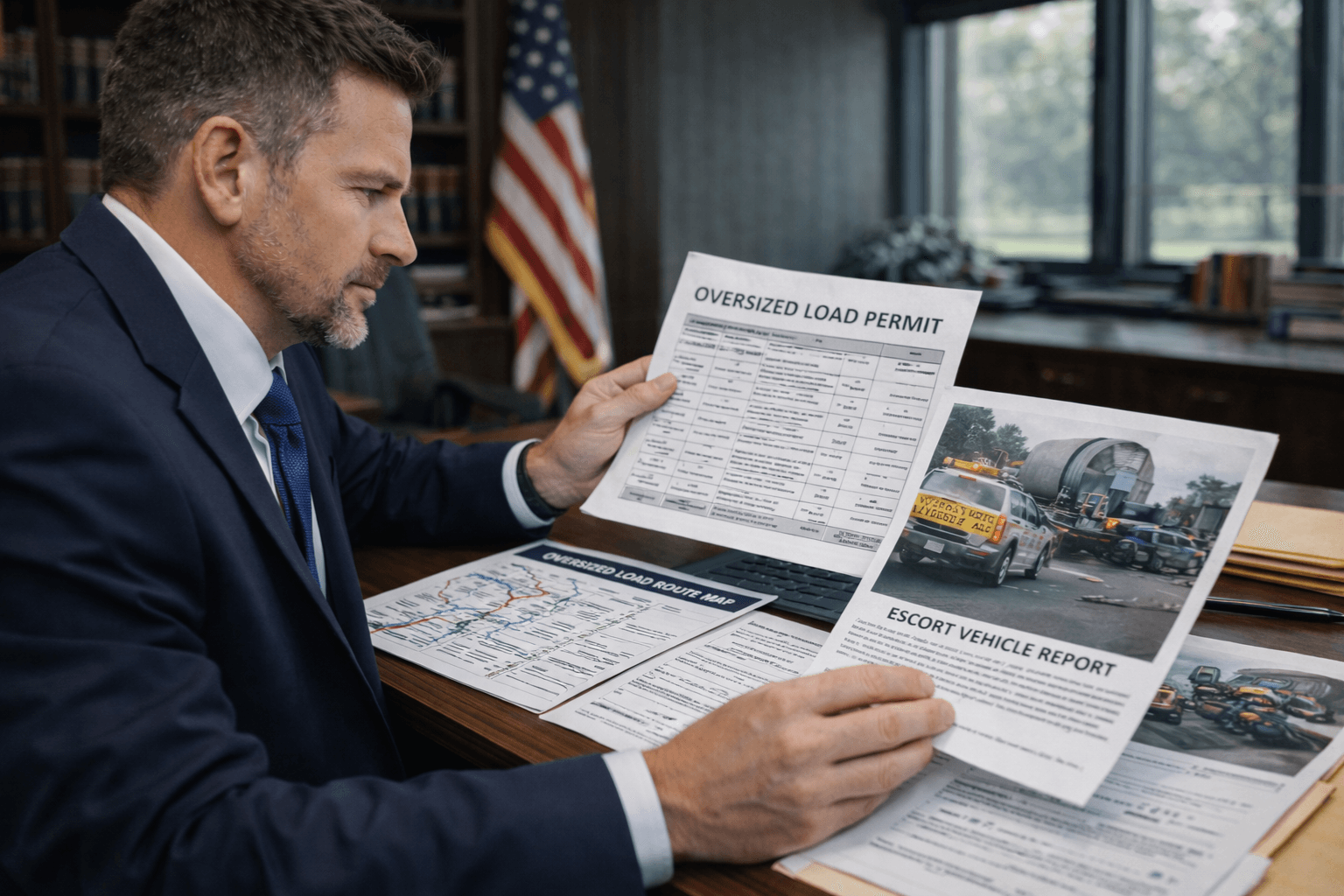
Oversized loads often require state permits, escorts, and specific routes. Evidence preservation focuses on permits, routing documents, load measurements, and escort records in addition to standard FMCSA-related evidence.
Definitions and Core Concepts
Definition Table
The Term refers to oversized load. Practical Meaning: Load exceeding legal limits. Why It Matters: Requires permits and routing. The Term refers to permit. Practical Meaning: State authorization to move oversized load. Why It Matters: Defines legal duties. The Term refers to escort vehicle. Practical Meaning: Pilot or escort support. Why It Matters: Safety requirement. The Term refers to route plan. Practical Meaning: Approved travel path. Why It Matters: Compliance evidence. The Term refers to load measurement. Practical Meaning: Height/width/weight data. Why It Matters: Determines compliance.
Regulatory Framework for Oversized Loads
Oversized load regulations are largely state-based, but FMCSA safety rules still apply to carriers and drivers. Permits set route restrictions and escort requirements. FMCSA rules are available on eCFR and guidance is on FMCSA.
Key Compliance Duties
- Obtain and follow permit conditions
- Use required escort vehicles
- Follow approved route and timing restrictions
- Ensure load securement and equipment safety
Permit Compliance Table
The Requirement refers to permit obtained. Evidence Source: Permit documents. Liability Use: Establishes duty. The Requirement refers to route compliance. Evidence Source: Route logs, GPS. Liability Use: Shows deviation. The Requirement refers to escort use. Evidence Source: Escort logs. Liability Use: Compliance proof. The Requirement refers to load measurements. Evidence Source: Scale tickets. Liability Use: Confirms legal limits.
Evidence Preservation Section
Oversized load cases require preservation of permit and routing records that can be lost quickly.
Preservation Checklist
- Preserve permits and route approvals
- Secure escort logs and communications
- Preserve load measurement records
- Obtain dispatch and routing records
- Preserve ECM/EDR and ELD data
Timing Table
The Evidence Type refers to permits. Risk of Loss: Medium. Action: Immediate request. The Evidence Type refers to escort logs. Risk of Loss: Medium. Action: Preservation notice. The Evidence Type refers to load measurements. Risk of Loss: Medium. Action: Written request.
Step-by-Step Oversized Load Liability Analysis
Step 1: Confirm Permit Requirements
Determine which permits were required and whether they were obtained.
Step 2: Review Route Compliance
Compare actual travel routes with permit conditions.
Step 3: Analyze Escort Requirements
Verify whether escort vehicles were used as required.
Step 4: Assess Load Measurements
Check weight, height, and width against permit limits.
Step 5: Map Liability Across Parties
Identify responsibility for permit compliance, routing, and load securement.
Settlement Valuation Section
Permit violations can strengthen liability and increase settlement leverage.
Valuation Inputs
- Permit compliance evidence
- Route deviation or escort failures
- Injury severity and damages
- Coverage layers
Valuation Impact Table
The Evidence Strength refers to clear permit violations. Liability Clarity: High. Negotiation Leverage: Strong leverage. The Evidence Strength refers to partial evidence. Liability Clarity: Medium. Negotiation Leverage: Moderate leverage. The Evidence Strength refers to weak evidence. Liability Clarity: Low. Negotiation Leverage: Reduced leverage.
Insurance Layer Explanation
Oversized load cases may involve carrier, escort, and loader coverage.
Coverage Checklist
- Carrier primary and excess policies
- Escort company liability coverage
- Loader or shipper policies
Comparison Table: Oversized Load vs Standard Truck Case
Permits. Required. Not typically required
Route restrictions. Strict. Standard
Escort vehicles. Often required. Rare
Evidence focus. Permits and routing. FMCSA logs
Checklist Box: Oversized Load Case Readiness
- Permit documents preserved
- Route and escort logs obtained
- Load measurements confirmed
- ELD/ECM data preserved
- Coverage layers mapped
Internal Navigation: Related Truck Accident Guides
- For cargo issues, see cargo securement failures.
- For the pillar guide, read truck accident lawyer hiring.
- For maintenance records, read maintenance records evidence.
- For reconstruction analysis, see reconstruction experts.
- For insurance layers, read commercial insurance limits.
- For spoliation strategy, see spoliation letter guide.
- Return to truck accident resources.
Source Box (Official .gov References)
- FMCSA Regulations and Guidance: https://www.fmcsa.dot.gov
- eCFR (49 CFR Parts 390-399): https://www.ecfr.gov
- National Highway Traffic Safety Administration: https://www.nhtsa.gov
- U.S. Department of Transportation: https://www.transportation.gov
Related Resources
For broader context, review the Truck Accidents hub.
Related Guides
- 18-Wheeler Accident Lawyer: Proof, Liability, and Settlement Strategy
- Average Truck Accident Settlement
- Black Box Data in Truck Accidents
Pillar guide: 18-Wheeler Accident Lawyer: Proof, Liability, and Settlement Strategy
Helpful Tool
Use the Truck Accident Insurance Claim Tracker Google Sheets to organize documentation, expenses, and insurance claim records while applying this guide.
More Truck Accidents Guides

Semi-Truck Accident Attorney: What Makes These Cases Different
Explains why semi-truck accident cases are different, with FMCSA rules, evidence preservation, liability mapping, and insurance layers. Read our comprehensiv...

Truck Accident Lawyer Near Me: The Hiring Blueprint
Truck Accident Lawyer Near Me hiring blueprint for U.S. claims: FMCSA evidence, insurance limits, liability, and procedure. Read our comprehensive and expert...

Truck Maintenance Records After a Crash
A guide to truck maintenance records after a crash, including FMCSA inspection rules, evidence preservation, and liability analysis. Read our comprehensive a...

Hours-of-Service Violations and Liability
Explains how hours-of-service (HOS) violations create liability in truck accidents, with FMCSA rules, evidence preservation, and valuation impact. Read our c...

Cargo Securement Failures
A guide to cargo securement failures in truck accidents, with FMCSA rules, liability mapping, and evidence preservation steps. Read our comprehensive and exp...

Truck Accident Lawyer: Hiring, Evidence, and FMCSA Rules (2026)
A 2026 guide to hiring a truck accident lawyer, preserving evidence, and applying FMCSA rules in liability and settlement analysis. Read our comprehensive an...
Related Documentation Tools
View all toolsThese free spreadsheets help organize evidence, deadlines, and claim documentation for this topic.
Truck Accident Settlement Estimator Google Sheets
Estimate negotiable case value and keep damages evidence aligned with Settlement Calculator and Medical Expense Tracker before you share records with an insurer or attorney.
Truck Accident Insurance Claim Tracker Google Sheets
Estimate negotiable case value and keep damages evidence aligned with Accident & Claim Overview and Claim Timeline Tracker before you share records with an insurer or attorney.
Truck Accident Checklist Google Sheets
Build a timestamped evidence file that keeps facts consistent with Accident Overview and Driver Information before you share records with an insurer or attorney.
Truck Accident Evidence Log Google Sheets
Build a timestamped evidence file that keeps facts consistent with Accident Overview and Photo Log before you share records with an insurer or attorney.