
Summary
A step-by-step guide to bicycle accident insurance claims, including liability, UM/UIM coverage, evidence, and settlement strategy. Read our comprehensive an...
Quick Legal Answer: What this guide covers
A step-by-step guide to bicycle accident insurance claims, including liability, UM/UIM coverage, evidence, and settlement strategy. Read our comprehensive an...
Quick Legal Answer: Core legal focus
This guide focuses on bicycle insurance claim guide within bicycle accident guides and the evidence, timelines, and standards typically evaluated under U.S. law.
Quick Legal Answer: When to verify with counsel
Because statutes and rules vary by state, confirm the specifics for your jurisdiction with a qualified attorney or official government resources.
Key Takeaways
- Understand the core rules and evidence standards tied to bicycle insurance claim guide.
- Track deadlines and procedural steps that shape recovery options.
- Document medical records, liability proof, and insurance communications early.
- Compare settlement posture with litigation risk based on the case record.
Bicycle Accident Insurance Claim Guide
bicycle insurance claim guide
Bicycle insurance claim guide legal context
Bicycle insurance claim guide liability map
Bicycle insurance claim guide evidence focus
Bicycle insurance claim guide settlement note
This guide explains how to file a bicycle insurance claim, identify coverage layers, and document damages. It focuses on liability, evidence preservation, and settlement strategy for U.S. bicycle crashes.
Bicycle accident insurance claims require clear evidence, right-of-way analysis, and documentation of damages. This guide explains how to file a bicycle accident claim, which coverage layers may apply, and how to preserve evidence that supports liability and settlement value in U.S. cases. bicycle insurance claim guide principles are most useful when applied early, before insurer positions harden and evidence disappears.
Start with the basics: confirm liability coverage, then check uninsured motorist coverage and underinsured motorist coverage. Build an evidence preservation plan, prepare a clean demand package, and think carefully before a recorded statement. Track medical liens and subrogation early, document a separate property damage claim, and organize pain and suffering proof. Liability disputes often turn on comparative fault, and the pace is set by settlement negotiation strategy, the claim timeline, and real-world policy limits.
This overview explains how bicycle insurance claim guide considerations shape evidence, liability, and recovery planning.
Cyclist claims can involve multiple policies: the driver’s liability insurance, the cyclist’s UM/UIM coverage, MedPay, and health insurance. Understanding these layers helps avoid delays and ensures all sources of recovery are identified.
The insurance claim timeline often depends on medical stabilization, the availability of coverage information, and the strength of the evidence record. Early organization reduces the chance that policy limits are overlooked or that a property damage claim is separated from the injury claim without coordination.
Definitions and Core Concepts
Liability coverage refers to the driver’s policy and is typically the primary recovery source. UM/UIM means uninsured motorist coverage or underinsured motorist coverage, which can act as a backup recovery source when the driver lacks adequate insurance. MedPay is medical payments coverage that can help with early medical bills while liability is still being evaluated. Subrogation is an insurer’s reimbursement claim that can reduce net recovery if medical payments were made. A demand package is a structured claim request that summarizes liability, damages, and settlement negotiation expectations.
Insurance Coverage Layers for Cyclists
Common Coverage Layers
- Driver liability insurance
- Cyclist UM/UIM coverage
- MedPay or health insurance
- Umbrella coverage in limited cases
Driver liability coverage applies when the driver is at fault and is supported by a police report, witness statements, and consistent accounts. UM/UIM coverage applies when the driver is uninsured or underinsured and requires policy terms, coverage confirmation, and the same core liability evidence. MedPay applies to immediate medical costs and is supported by bills and treatment notes regardless of fault.
Coverage layers should be evaluated with policy limits in mind, including whether stacked coverage is available under state rules. A coordinated approach helps avoid gaps in reimbursement and reduces later disputes about subrogation.
Evidence Preservation Section
Evidence Checklist
- Police report and incident number
- Photos of scene and bike damage
- Witness statements and contact info
- Medical records and bills
- Helmet condition and bike data
Witness statements carry a high risk of loss and should be collected immediately. Scene photos should be captured the same day if possible, before conditions change. Video footage is often overwritten quickly, so requests should be made without delay and documented in writing.
Preserve repair estimates, invoices, and receipts for bicycle replacement or repair to support the property damage claim, and keep a clear record of out-of-pocket expenses.
Step-by-Step Insurance Claim Process
Step 1: Report the Crash
Call law enforcement and obtain a police report.
Step 2: Identify Coverage Layers
Request policy information from the driver and review your own coverage.
Step 3: Document Injuries
Seek medical care and keep complete records.
Step 4: Build the Evidence File
Organize photos, witness statements, and medical documentation.
Step 5: Submit the Claim
Provide a structured demand or claim submission to insurers.
A well-prepared demand package should include the liability narrative, medical chronology, wage loss documentation, and a clear explanation of pain and suffering impacts. This establishes a baseline for settlement negotiation and reduces unnecessary delays.
Step 6: Negotiate or Escalate
Respond to insurer requests and consider litigation if liability is disputed.
If an insurer requests a recorded statement, provide accurate facts only and avoid speculation. Keep the scope limited to verifiable details such as the location, time, roadway conditions, and the sequence of events.
Liability Analysis for Insurance Claims
Right-of-way and lane rules determine fault. Evidence should show how the driver violated cyclist rights and should connect the traffic rule breach to the impact. A clear timeline of events, roadway markings, and any traffic controls can strengthen liability coverage arguments and reduce comparative fault exposure.
Dooring claims focus on a driver’s duty to ensure it is safe before opening a door, supported by photos and witness accounts. Right hook collisions focus on failure to yield during a turn, supported by signal evidence, turn position, and roadway geometry. Bike lane encroachment claims focus on lane violations, supported by lane markings, traffic controls, and scene photos.
Who Is at Fault in Bicycle Accidents
Fault depends on right-of-way rules, lane positioning, and driver conduct. Clear liability supports faster claim resolution, while disputed fault can delay settlement. Evidence from police reports and witness statements is key to establishing fault and protecting coverage.
Driver Negligence and Liability
Negligence includes unsafe passing, failure to yield, dooring, and lane encroachment. A traffic violation can support negligence per se in many states and strengthen claim value. Evidence of the violation should be tied to medical records and damages documentation.
Cyclist Rights Under Traffic Law
Cyclists generally have the same rights and duties as drivers and may lawfully use travel lanes when bike lanes are unsafe. Understanding these rights helps rebut comparative fault arguments and protects settlement leverage in insurance negotiations.
Insurance Claims After Bicycle Accidents
Claims typically start with the driver’s liability policy and expand to UM/UIM, MedPay, or health coverage if limits are low or the driver is uninsured. Confirm policy limits and coverage exclusions early to avoid delayed or denied claims.
Evidence Needed for a Claim
Evidence should include the police report, scene photos, bike damage documentation, and witness statements. Medical records and wage documentation prove damages. A complete evidence file reduces disputes and strengthens settlement negotiations.
Settlement and Compensation Examples
Compensation can include medical expenses, wage loss, future care, and pain and suffering. A clear right-of-way violation with documented injuries often supports a higher settlement range than a disputed fault case. Policy limits still cap recovery even when damages are high.
Steps to Take After a Bicycle Accident
Report the crash, seek medical care, and document the scene. Preserve bike damage, collect witness contacts, and request video footage quickly. Notify insurers promptly and keep copies of all communications.
When to Contact a Lawyer
Contact a lawyer early if injuries are severe, liability is disputed, or coverage is unclear. Legal help is also important when UM/UIM claims are denied or when insurers request recorded statements that could affect liability.
Settlement Valuation Section
Valuation Inputs
- Medical costs and future care
- Wage loss documentation
- Liability clarity
- Non-economic impact
When evidence is strong and liability is clear, negotiation leverage is stronger and insurers are less likely to dispute core facts. When evidence is moderate or fault is partially disputed, leverage becomes more limited and settlement negotiation may require additional documentation or expert input. When evidence is weak and fault is disputed, leverage is reduced and the claim timeline often extends.
Damages analysis should separate medical costs, future care needs, wage loss, and pain and suffering to avoid confusion in the valuation process. If medical liens exist, track them early so net recovery calculations remain accurate throughout negotiations.
Bicycle vs Auto Claims
Bicycle claims often rely on bike damage, helmet condition, and rider visibility, while auto claims more commonly rely on vehicle damage patterns. Coverage layers can be different as well, with UM/UIM coverage often playing a central role in bicycle claims. Liability analysis for bicycle claims frequently turns on right-of-way, dooring, and lane encroachment rules, while auto claims often focus on speed, following distance, and lane changes.
Checklist Box: Claim Readiness
- Police report obtained
- Medical records organized
- Witness statements collected
- Coverage layers identified
- Evidence file prepared
Internal Navigation: Related Bicycle Accident Guides
- For the pillar guide, see bicycle accident lawyer guide.
- For claim timelines, read bike accident attorney guide.
- For UM/UIM scenarios, see hit-and-run bicycle accident.
- For settlement context, read average bicycle settlement.
- For police reports, visit police report guide.
- Return to bicycle accident resources.
Frequently Asked Questions
Can I file a claim without a police report? It is possible, but insurers may challenge liability. A report strengthens the claim and helps establish the claim timeline. Without one, photos, witness statements, and medical records become more important. Some UM/UIM policies require a report, so check policy terms early.
Do I have to talk to the driver’s insurer? You may need to provide information, but be cautious with recorded statements and stick to verified facts. Provide basic details about the crash without speculation about fault or speed. Keep a record of communications and avoid signing releases without reviewing them.
Can I use homeowners insurance for bike damage? Some policies treat bicycle loss as a property damage claim, but coverage varies by policy limits and exclusions. Homeowners or renters coverage may apply to theft or certain damage scenarios, but collision-related damage may be excluded. Review policy terms before relying on this coverage.
How do medical liens affect my claim? Liens may reduce net recovery, so track them early and confirm any subrogation positions. Health insurers and providers can seek reimbursement from settlement funds. Knowing lien amounts and negotiating reductions can materially improve net recovery.
What if I was partially at fault? Most states allow recovery with comparative fault reductions, which means damages may be reduced but not eliminated. The percentage of fault assigned to the cyclist reduces the total settlement. Strong right-of-way evidence helps minimize fault allocation.
How long should I keep records? Keep all claim records until the case is fully resolved and all policy limits and liens are finalized. Insurers may request records long after initial filings, and lien resolution can take months. Secure digital copies of all documents and communications.
Related Resource: Bicycle Accident Lawyer: Dooring, Right-of-Way & Helmet Laws
Related Resources
For broader context, review the Bicycle Accidents hub.
Related Guides
- Average Bicycle Accident Settlement
- Bicycle Accident Lawyer Near Me: How to Choose the Right Firm
- Bicycle Accident Lawyer: Dooring, Right-of-Way & Helmet Laws
Pillar guide: Bicycle Accident Lawyer: Dooring, Right-of-Way, and Helmet Laws
Helpful Tool
Use the Bicycle Accident Checklist Google Sheets to organize documentation, expenses, and insurance claim records while applying this guide.
Official References
More Bicycle Accidents Guides

Car Door Bicycle Accident: Dooring Liability and Evidence
A U.S. legal guide to car door bicycle accidents (dooring), covering liability standards, evidence preservation, and insurance coverage. Read our comprehensi...

Bicycle Wrongful Death Lawsuit: Liability, Damages, and Deadlines
A U.S. legal guide to bicycle wrongful death lawsuits covering liability standards, damages, estate vs. family claims, evidence preservation, and filing dead...
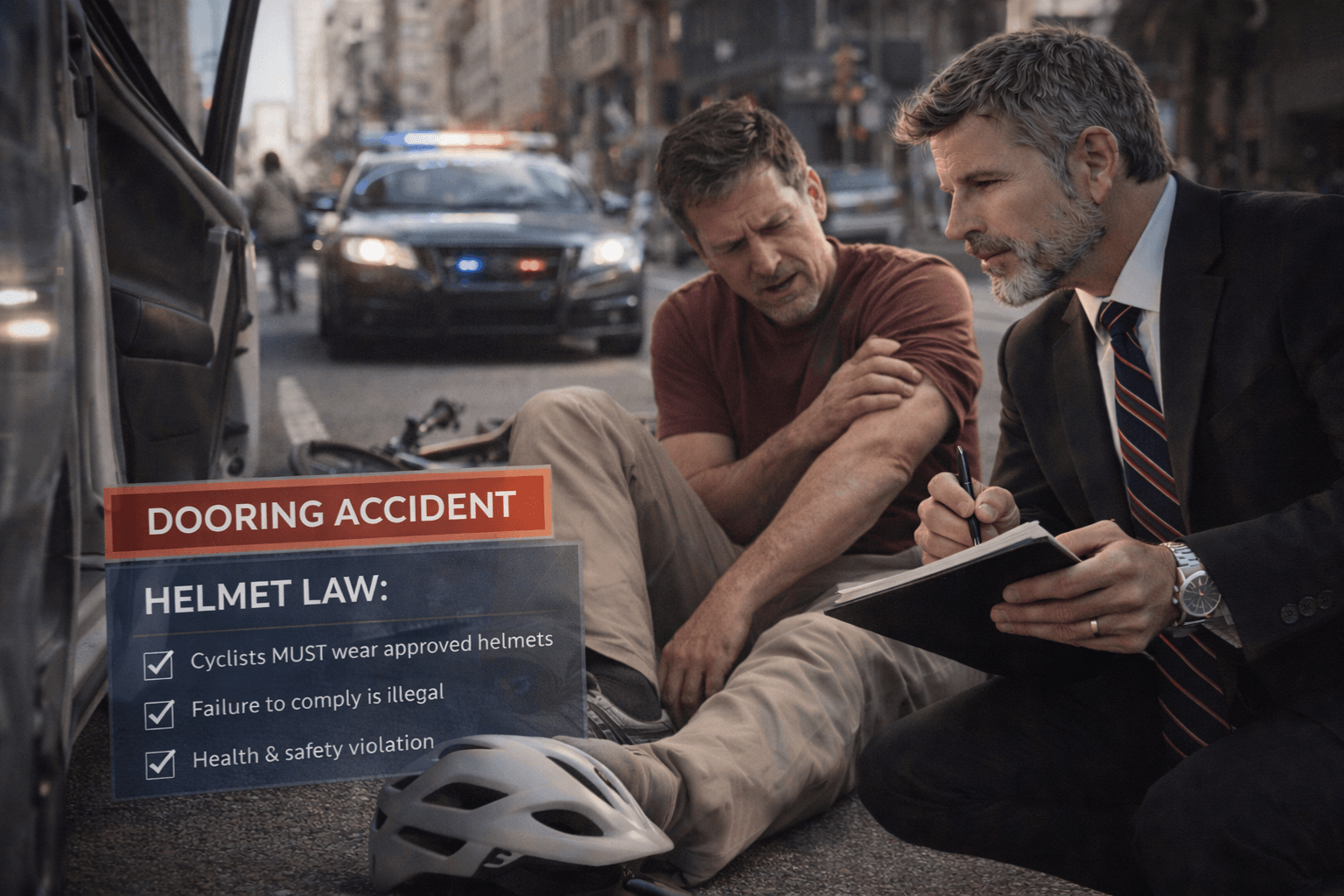
Bicycle Accident Lawyer: Dooring, Right-of-Way & Helmet Laws
Bicycle Accident Lawyer guide for dooring, right-of-way, and helmet law claims under U.S. liability, evidence, insurance, and damages rules. Read our compreh...

Food Delivery Bicycle Accidents: Liability and Insurance Layers
A U.S. legal guide to food delivery bicycle accidents covering platform liability, driver status, insurance coverage layers, and evidence preservation.
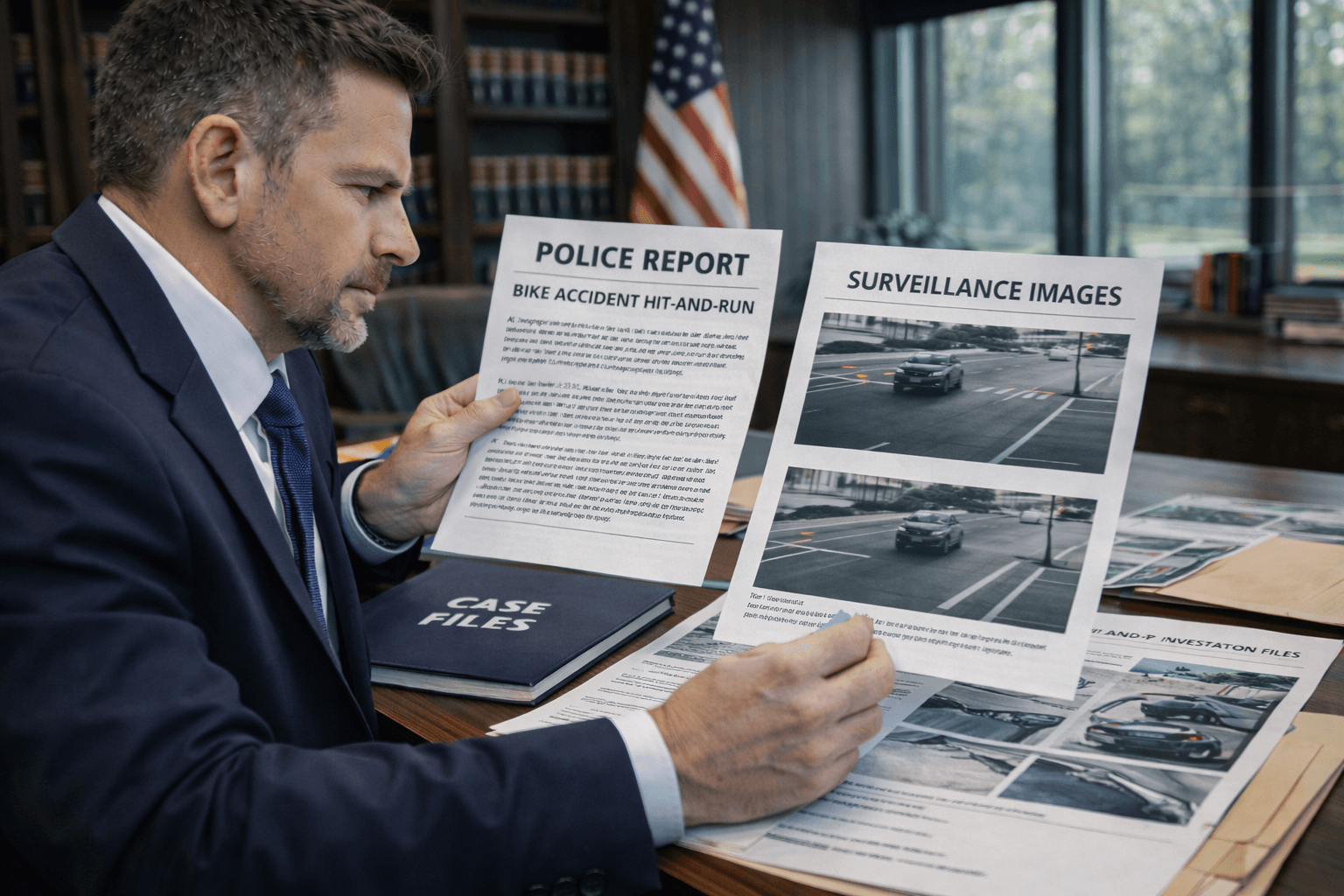
Hit-and-Run Bicycle Accident
Essential guide to hit-and-run bicycle crashes, including evidence preservation, UM/UIM coverage, and claim timelines. Learn how to recover even when the dri...
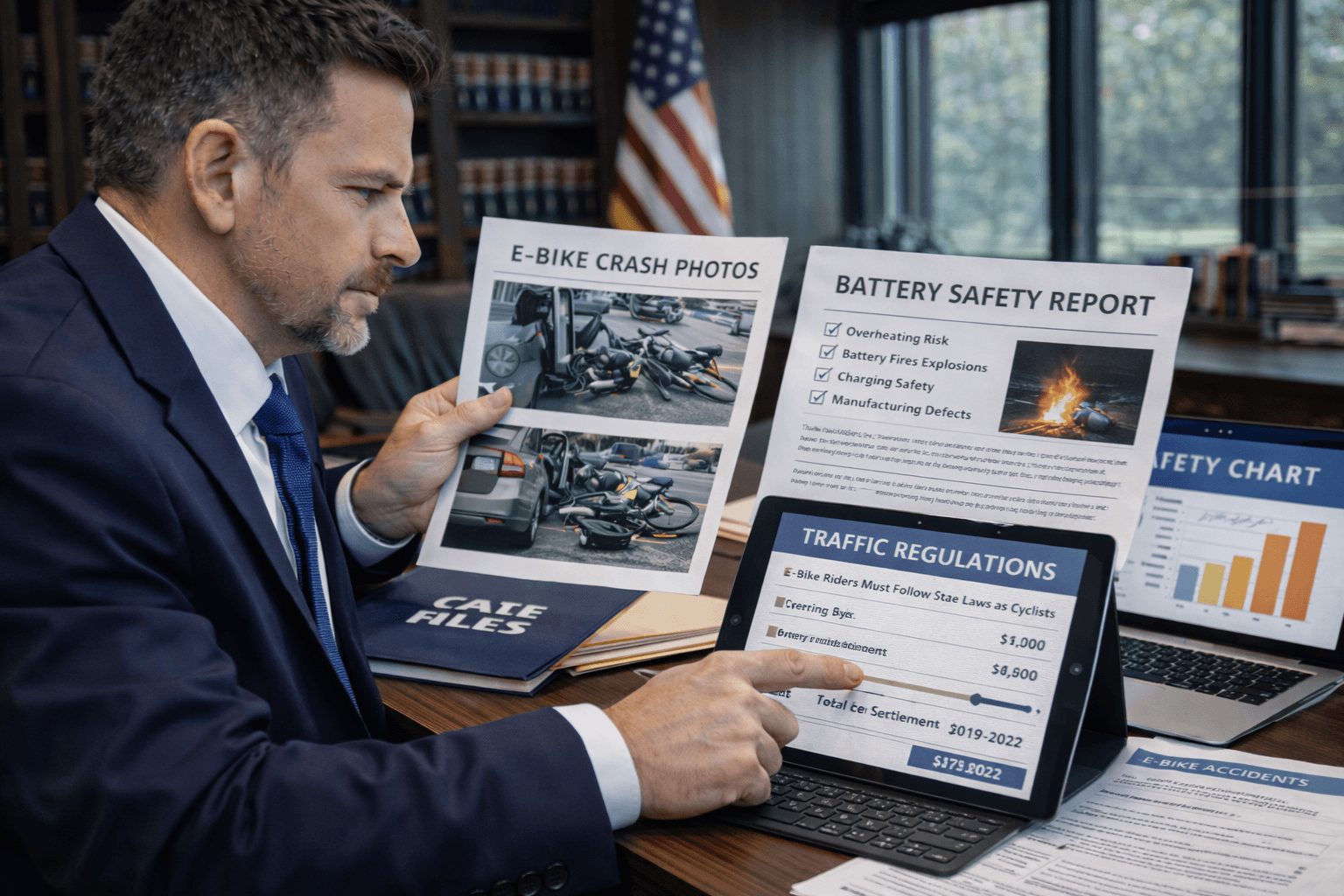
Electric Bike Accident Lawyer
A guide to electric bike accidents, including e-bike classifications, right-of-way rules, evidence preservation, and settlement strategy. Read our comprehens...
Related Documentation Tools
View all toolsThese free spreadsheets help organize evidence, deadlines, and claim documentation for this topic.
Bicycle Accident Settlement Estimator Google Sheets
Estimate negotiable case value and keep damages evidence aligned with Settlement Calculator and Medical Expenses before you share records with an insurer or attorney.
Bicycle Accident Insurance Claim Tracker Google Sheets
Estimate negotiable case value and keep damages evidence aligned with Accident Overview and Claim Tracker before you share records with an insurer or attorney.
Bicycle Accident Checklist Google Sheets
Build a timestamped evidence file that keeps facts consistent with 1 Accident Overview and 2 Driver Information before you share records with an insurer or attorney.
Bicycle Injury Documentation Tracker Google Sheets
Maintain a structured accident record from incident day through claim resolution with Accident Overview and Injury Log before you share records with an insurer or attorney.