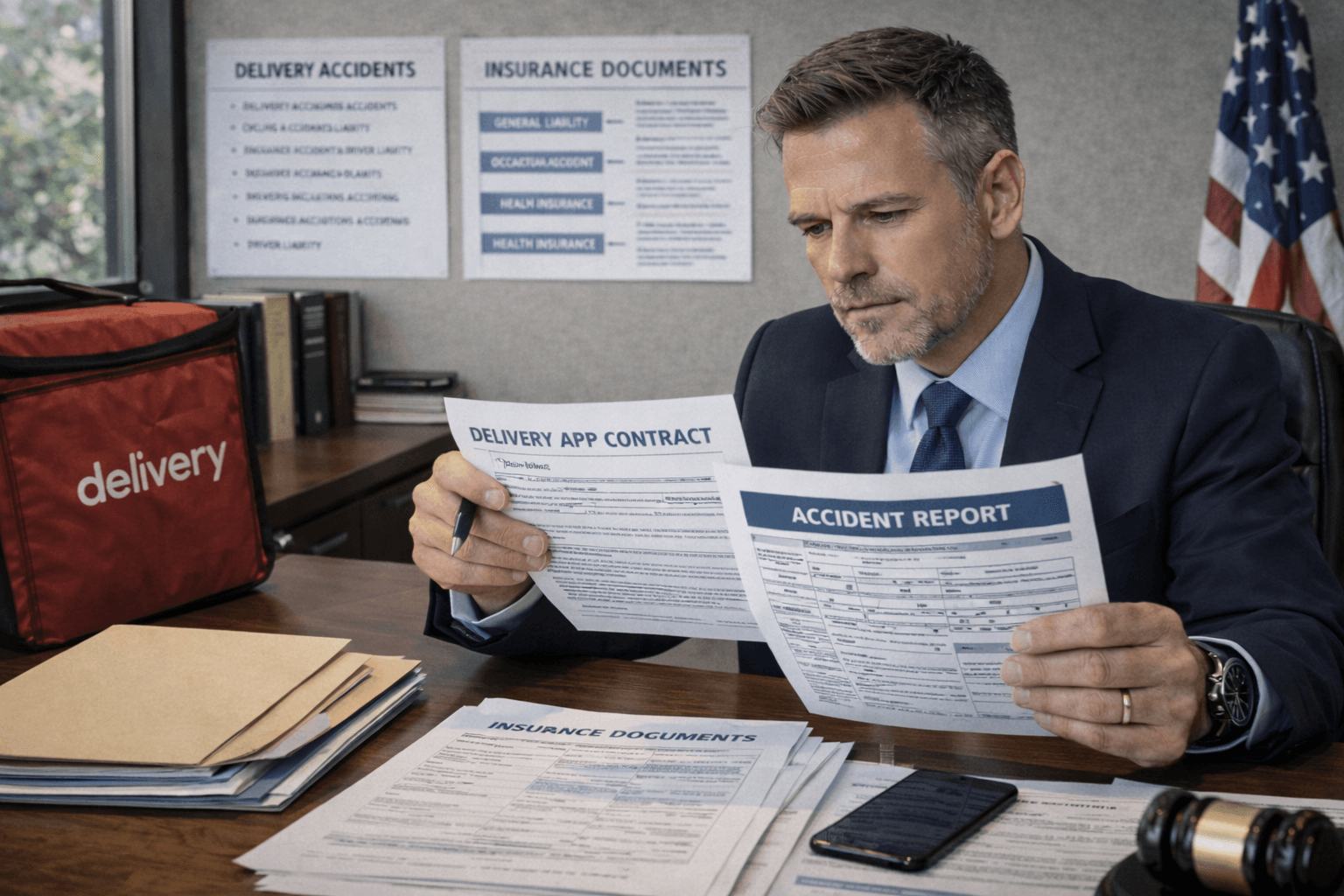
Summary
A U.S. legal guide to food delivery bicycle accidents covering platform liability, driver status, insurance coverage layers, and evidence preservation.
Quick Legal Answer: What this guide covers
A U.S. legal guide to food delivery bicycle accidents covering platform liability, driver status, insurance coverage layers, and evidence preservation.
Quick Legal Answer: Core legal focus
This guide focuses on food delivery bicycle accidents within bicycle accident guides and the evidence, timelines, and standards typically evaluated under U.S. law.
Quick Legal Answer: When to verify with counsel
Because statutes and rules vary by state, confirm the specifics for your jurisdiction with a qualified attorney or official government resources.
Key Takeaways
- Understand the core rules and evidence standards tied to food delivery bicycle accidents.
- Track deadlines and procedural steps that shape recovery options.
- Document medical records, liability proof, and insurance communications early.
- Compare settlement posture with litigation risk based on the case record.
Food Delivery Bicycle Accidents: Liability and Insurance Layers
Food delivery bicycle accidents legal context
Food delivery bicycle accidents liability map
Food delivery bicycle accidents evidence focus
Food delivery bicycle accidents settlement note
This guide explains liability and insurance coverage for food delivery bicycle accidents. It focuses on app data, rider status, and evidence preservation that supports recovery.
Food delivery bicycle accidents involve unique liability questions because a cyclist is often working under an app-based or store-based delivery system. Determining who is responsible can require analyzing delivery app liability, gig worker coverage, and commercial insurance layers. The file should also document the bicycle accident settlement range, cyclist rights, dooring liability, and right-of-way rules that control fault. Evidence planning must address helmet law impact, comparative fault exposure, and uninsured motorist coverage options. It should also include early evidence preservation steps, a clean bike lane dispute analysis, and reliable police report and medical records documentation.
This overview explains how food delivery bicycle accidents considerations shape evidence, liability, and recovery planning.
Delivery-related crashes can occur during pickup, en route travel, or while searching for an address. Each phase can affect which insurance policy applies. Documenting the rider’s activity and the delivery status at the time of the crash is essential.
Definitions and Core Concepts
Definition Table
The Term refers to delivery platform. Practical Meaning: App or company coordinating orders. Why It Matters: May influence liability and coverage. The Term refers to independent contractor. Practical Meaning: Worker not treated as employee. Why It Matters: Affects vicarious liability. The Term refers to vicarious liability. Practical Meaning: Employer responsibility for worker. Why It Matters: Can expand recovery sources. The Term refers to active delivery. Practical Meaning: Rider is logged in and fulfilling an order. Why It Matters: Can trigger platform coverage. The Term refers to commercial policy. Practical Meaning: Insurance covering business activity. Why It Matters: Higher limits than personal coverage.
Liability Analysis for Delivery Bicycle Crashes
Driver Conduct and Traffic Law
Liability starts with the same core analysis as other bicycle cases: right-of-way, safe passing, lane position, and signal compliance. A delivery rider must follow traffic laws like any other cyclist.
Platform or Business Liability
Some delivery riders work for restaurants or grocery stores as employees. If the rider is acting within job duties, the business can be liable for the rider’s negligence. App-based platforms often classify riders as independent contractors, which can limit vicarious liability but does not eliminate direct liability for unsafe policies or negligent hiring practices if applicable under state law.
Employee vs. Contractor Status Factors
States apply different tests to determine whether a rider is an employee or contractor. Factors can include who controls schedules, whether the rider provides equipment, and how payment is structured. These classifications can affect whether an employer is legally responsible for the rider’s conduct.
Legal Overview of Food Delivery Bicycle Accidents
Delivery crashes are governed by state traffic law and negligence principles, but insurance coverage depends on delivery status and rider classification. App data and employment status often determine which policy applies. Liability still hinges on right-of-way, lane rules, and driver conduct.
Who Is at Fault in Food Delivery Bicycle Accidents
Fault depends on right-of-way rules and driver behavior. Delivery status does not change traffic duties, but it can add additional parties such as employers or platforms. Evidence of the rider’s status and the driver’s violation is critical.
Driver Negligence and Liability
Negligence includes unsafe passing, failure to yield, dooring, or distracted driving. Evidence of a traffic law violation strengthens liability and supports recovery even when coverage is complex. Police reports and witness statements are essential.
Cyclist Rights Under Traffic Law
Delivery riders generally have the same rights and duties as other cyclists. They must obey signals and lane rules, but they may lawfully take the lane when bike lanes are unsafe. Compliance with traffic rules helps minimize comparative fault.
Insurance Claims After Delivery Crashes
Claims can involve driver liability policies, platform coverage, employer policies, and UM/UIM. Coverage may depend on whether the rider was actively delivering. Confirm policy limits and coverage phases early to avoid delays.
Evidence Needed for a Claim
Evidence should include police reports, scene photos, app logs, and witness statements. Delivery status records, timestamps, and route maps confirm coverage phase. Medical records and wage documentation prove damages and income loss.
Settlement and Compensation Examples
Compensation can include medical expenses, wage loss, future care, and pain and suffering. A clear right-of-way violation with app data confirming active delivery often supports a stronger settlement range than a disputed status case. Policy limits still cap recovery.
Steps to Take After a Delivery Crash
Report the crash, document the scene, and preserve app data immediately. Capture screenshots of order status and timestamps. Collect witness contacts and request video footage quickly. Notify insurers and platforms as required.
When to Contact a Lawyer
Contact a lawyer early if coverage is disputed, injuries are severe, or multiple parties may share liability. Legal help is also critical when a platform denies coverage based on delivery status.
Delivery Status and App Data
Delivery apps log time-stamped activity such as order acceptance, pickup, and drop-off. These records can confirm whether the rider was actively delivering, which matters for coverage.
Data Preservation Tips
- Screenshot order timelines and route maps
- Save emails or push notifications confirming order status
- Export earnings statements showing the delivery window
- Note any app outages or errors that might explain gaps
Common Defenses in Delivery Bike Cases
“Off Duty†or “Not on a Deliveryâ€
Platforms may argue the rider was not actively delivering at the time of the crash. App logs and timestamps help rebut this defense.
Comparative Fault Arguments
Defendants may claim the cyclist rode too fast, ignored signals, or used a sidewalk improperly. Scene photos and witness statements can clarify the cyclist’s position and speed.
Coverage Denials for Commercial Use
Some personal policies deny coverage for commercial activity. Confirm the policy language and identify alternative coverage sources early.
App Evidence Checklist
- Trip logs and order history
- Delivery timestamps and location history
- In-app messages or navigation logs
- Payment records or earnings statements
Insurance Coverage Layers
Coverage Checklist
- At-fault driver liability policy
- Platform or employer liability coverage (if applicable)
- Rider’s personal insurance (auto or bicycle policy if any)
- Cyclist UM/UIM coverage or MedPay
- Commercial umbrella policies for business owners
Coverage can vary significantly. Some platforms provide limited liability coverage only when the rider is actively delivering, while personal policies may exclude commercial use. This makes precise documentation of delivery status critical.
Coverage Phases in App-Based Delivery
Some platforms distinguish between phases such as “app on but no order,†“order accepted,†and “active delivery.†Coverage limits can change between phases. A rider may have different protection when waiting for orders versus actively transporting food. Documenting the exact phase helps determine which policy applies.
Evidence Preservation Section
Evidence Checklist
- Police report and crash number
- App logs showing delivery status
- Photos of the scene, bike, and vehicle damage
- Witness statements and contact information
- Medical records and treatment timeline
Preservation Timing Table
The Evidence Type refers to app data. Risk of Loss: High. Action: Screenshot and export early. The Evidence Type refers to video footage. Risk of Loss: Very high. Action: Request quickly. The Evidence Type refers to scene photos. Risk of Loss: High. Action: Capture immediately. The Evidence Type refers to bike condition. Risk of Loss: Medium. Action: Photograph before repairs.
Delivery Location and Premises Issues
Crashes sometimes occur in restaurant parking lots, apartment driveways, or building entrances. When a property hazard contributes to a fall or collision, premises liability may be relevant. Photographing the location and noting maintenance issues can preserve this angle.
Right-of-Way and Sidewalk Rules
Some cities restrict sidewalk riding or require cyclists to yield to pedestrians in crosswalks. Delivery riders moving between street and sidewalk spaces should document signage and local rules because these details can affect comparative fault analysis.
Time Pressure and Safety Expectations
Delivery work can involve time pressure due to pickup windows or customer expectations. While time pressure does not excuse traffic violations, it can help explain why riders take certain routes or lane positions. Documenting app prompts or delivery time targets can provide context if a defendant argues that the rider acted unreasonably without cause.
If a rider is deactivated or suspended after a crash, keep records of the deactivation notice and any communications. These records can help document income loss or the practical impact of the injury on the rider’s ability to work.
Injury Documentation for Delivery Riders
Delivery riders often rely on their bikes for income, so injuries that limit riding can have immediate economic impact. Keep records of missed shifts, cancelled orders, and any medical restrictions that prevent riding. This documentation connects the injury to income loss beyond basic medical expenses.
Step-by-Step Food Delivery Crash Process
Step 1: Report the Crash
Call law enforcement and request a police report if injuries are present.
Step 2: Document Delivery Status
Capture screenshots of order status, navigation, and timestamps.
Step 3: Collect Evidence
Photograph the scene and gather witness statements.
Step 4: Identify All Potential Defendants
Evaluate drivers, delivery platforms, employers, or property owners.
Step 5: Analyze Coverage Layers
Confirm which policies apply based on delivery status and employment classification.
Step 6: Prepare a Structured Claim File
Organize medical records, wage loss data, and app evidence.
Delivery-Specific Damages Documentation
Delivery riders may lose income quickly if they cannot ride. Documenting earnings can require app history, weekly summaries, and bank deposits. If the rider uses specialized equipment such as e-bikes or cargo boxes, property damage estimates should include replacement costs and repair receipts.
Heavy delivery bags or cargo racks can affect braking and handling. If load weight contributed to the crash analysis, document the typical load and any app guidance about carrying limits. This context can clarify why a rider used a particular lane position or route.
If a delivery was declined or reassigned after the crash, keep the app log showing the change to document lost earnings.
Save screenshots with visible timestamps.
Damages Documentation Table
The Loss Type refers to income loss. Examples: Missed delivery shifts. Evidence: App earnings records. The Loss Type refers to equipment damage. Examples: Bike, phone mount, delivery bag. Evidence: Photos, receipts. The Loss Type refers to medical costs. Examples: Urgent care, therapy. Evidence: Bills, treatment notes.
Settlement Valuation Section
Valuation Inputs
- Liability clarity based on traffic code violations
- Injury severity and documented treatment
- Delivery status evidence and coverage layers
- Wage loss or reduced earning capacity
Valuation Impact Table
The Evidence Strength refers to strong. Coverage Clarity: Clear coverage. Negotiation Leverage: Strong leverage. The Evidence Strength refers to moderate. Coverage Clarity: Mixed coverage. Negotiation Leverage: Moderate leverage. The Evidence Strength refers to weak. Coverage Clarity: Coverage disputes. Negotiation Leverage: Reduced leverage.
Comparison Table: Delivery vs. Non-Delivery Bicycle Claims
Coverage complexity. Higher. Non-. Lower
Evidence focus. App data + traffic law. Non-. Traffic law + medical
Liability parties. Multiple potential defendants. Non-. Usually driver only
Checklist Box: Delivery Crash Readiness
- Police report obtained
- Delivery status documented with screenshots
- App logs and messages preserved
- Insurance policies identified
- Medical records and wage loss organized
Internal Navigation: Related Bicycle Accident Guides
- For the pillar guide, see bicycle accident lawyer guide.
- For right-of-way analysis, read cyclist right-of-way laws.
- For insurance coverage, see insurance claim guide.
- For hit-and-run scenarios, visit hit-and-run bicycle accident.
- For settlement context, see average bicycle settlement.
- Return to bicycle accident resources.
Frequently Asked Questions
Are delivery riders required to have special insurance?
Requirements vary by state and platform. Some platforms offer limited coverage; riders may need additional policies for commercial activity. If a personal policy excludes delivery use, riders may need a commercial endorsement or separate policy to avoid coverage gaps.
What if the delivery driver was on a break?
Coverage can change if the rider was not actively delivering. App logs help clarify status, including whether the rider was logged in, had accepted an order, or was actively delivering. These status distinctions often control which policy applies.
Can a restaurant be liable for a delivery rider’s crash?
If the rider is an employee acting within job duties, the restaurant may be vicariously liable. If the rider is an independent contractor, liability may be limited. Employment status tests vary by state, so documentation of control and scheduling is important.
How do I prove the rider was working at the time?
Use app records, order receipts, and delivery timestamps to document status. Screenshots of order acceptance, pickup, and drop-off confirm active delivery. Earnings summaries and route maps can further support the timeline if a platform disputes coverage.
Do delivery riders have the same roadway rights?
Yes. Cyclists generally have the same rights and duties as other vehicles under state law. Delivery status does not change right-of-way rules, but it can influence insurance coverage and comparative fault arguments when multiple parties are involved.
What if the driver was uninsured?
UM/UIM coverage may apply if the cyclist has it or if state rules allow it. Delivery riders should confirm UM/UIM coverage early because it may be the primary recovery source when the driver is uninsured or underinsured.
Source Box (Official .gov/State References)
- NHTSA Bicycle Safety: https://www.nhtsa.gov/road-safety/bicycle-safety
- FHWA Bicycle and Pedestrian Program: https://www.fhwa.dot.gov/environment/bicycle_pedestrian/
- U.S. Department of Transportation: https://www.transportation.gov
- State DOT portals: https://www.usa.gov/state-transportation
Related Resources
For broader context, review the Bicycle Accidents hub.
Related Guides
- Average Bicycle Accident Settlement
- Bicycle Accident Insurance Claim Guide
- Bicycle Accident Lawyer Near Me: How to Choose the Right Firm
Pillar guide: Bicycle Accident Lawyer: Dooring, Right-of-Way, and Helmet Laws
Helpful Tool
Use the Bicycle Accident Checklist Google Sheets to organize documentation, expenses, and insurance claim records while applying this guide.
More Bicycle Accidents Guides

Bicycle Accident Police Report: How to Get It and Use It
A U.S. guide to bicycle accident police reports covering how to request a report, correct errors, and use it in liability and insurance analysis. Read our co...
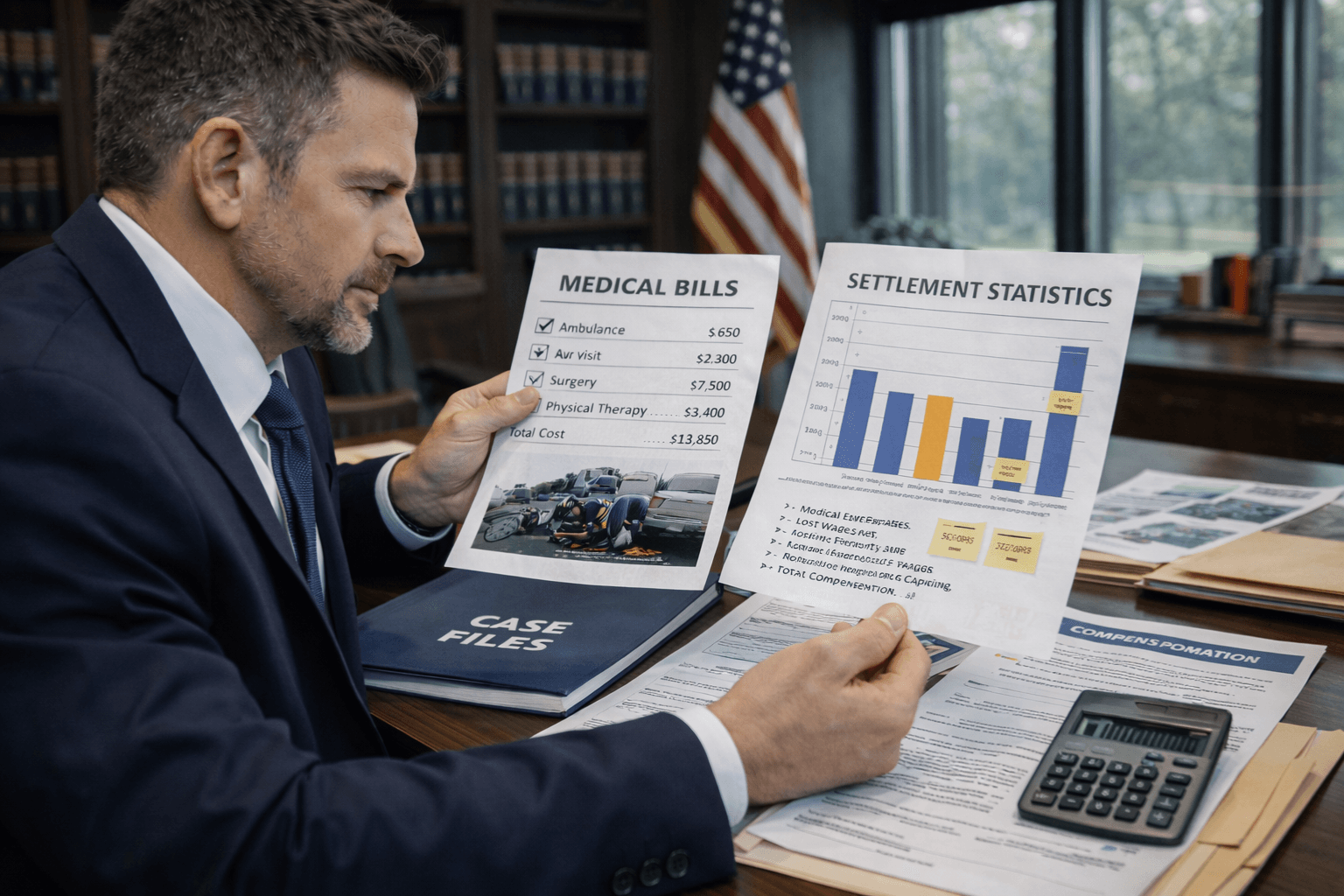
Average Bicycle Accident Settlement
Explains why average bicycle accident settlements vary and how liability, evidence quality, and insurance layers shape value. Read our comprehensive and expe...
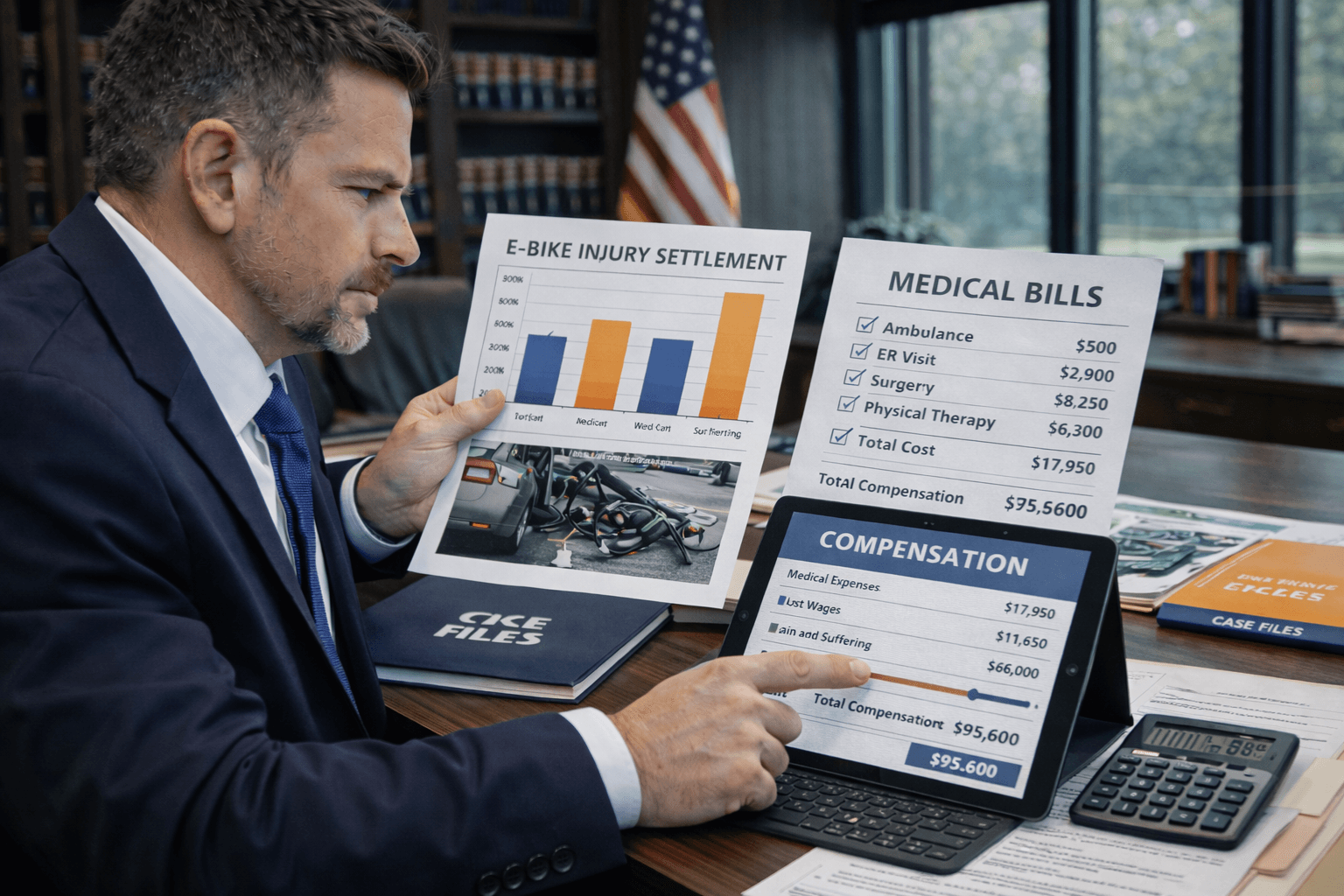
E-Bike Accident Settlement
A guide to e-bike accident settlement value, including classification compliance, evidence preservation, and insurance coverage layers. Read our comprehensiv...

Pain and Suffering in Bicycle Accidents
A guide to non-economic damages in bicycle accidents, with documentation strategies, valuation factors, and state law considerations. Read our comprehensive ...
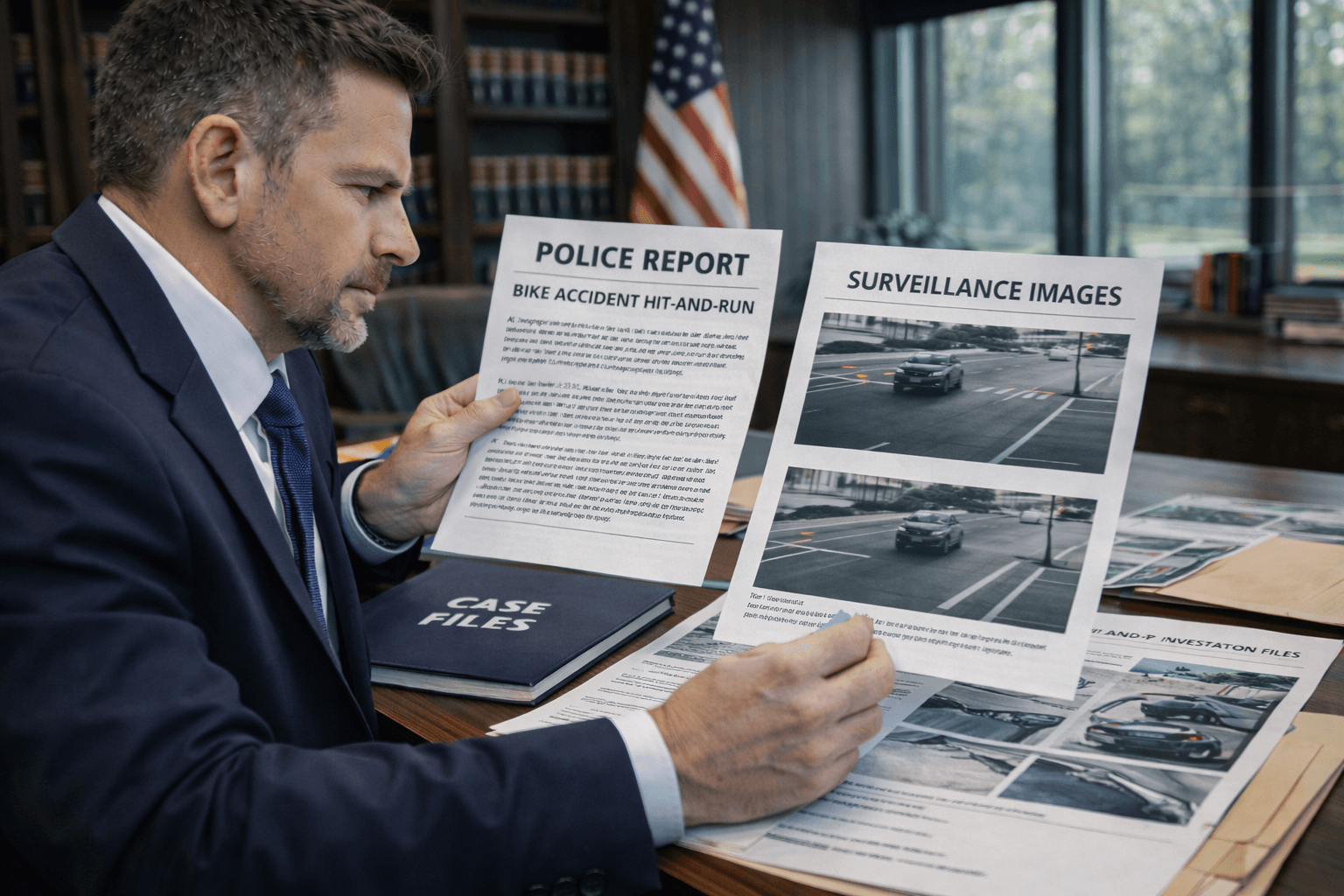
Hit-and-Run Bicycle Accident
Essential guide to hit-and-run bicycle crashes, including evidence preservation, UM/UIM coverage, and claim timelines. Learn how to recover even when the dri...
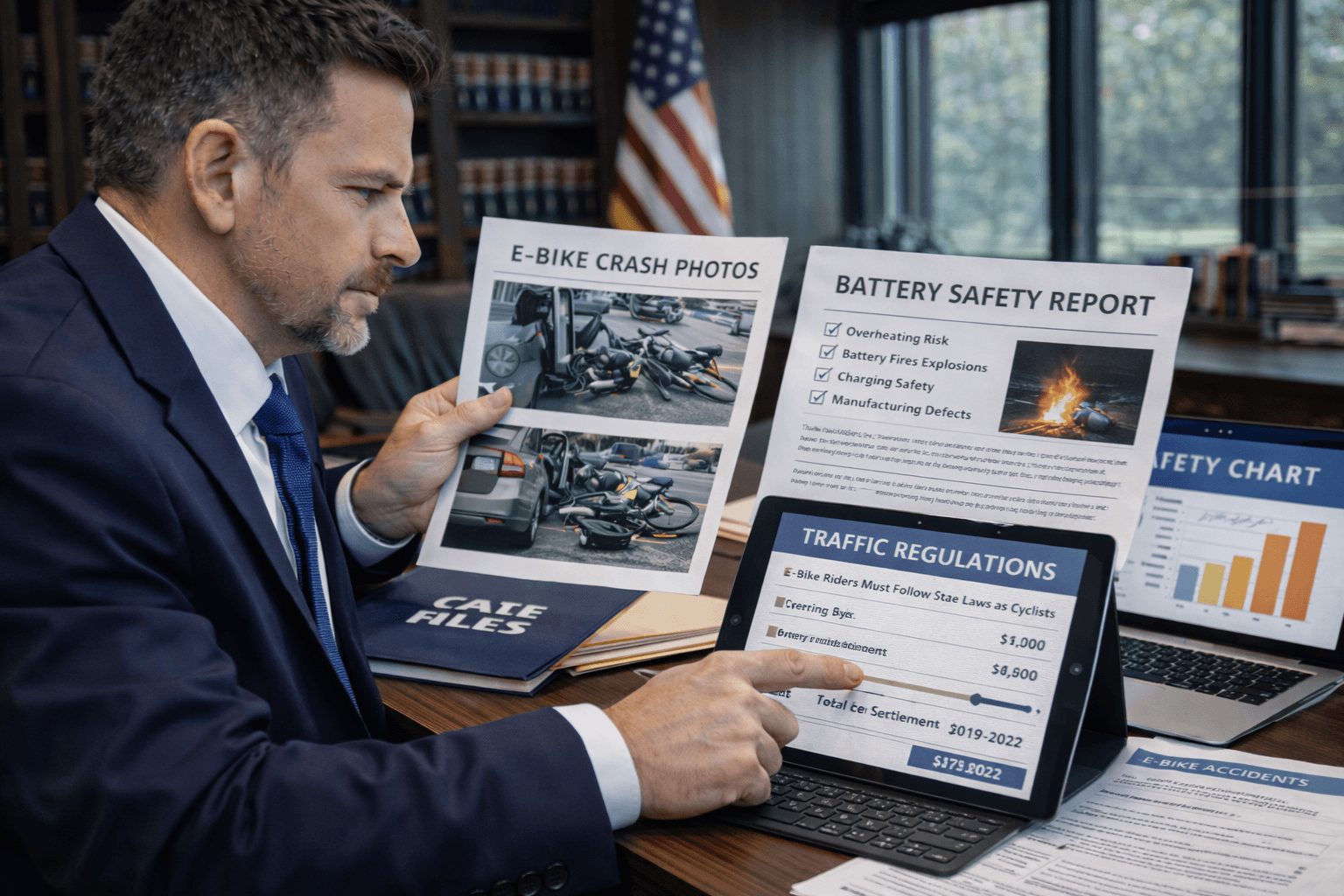
Electric Bike Accident Lawyer
A guide to electric bike accidents, including e-bike classifications, right-of-way rules, evidence preservation, and settlement strategy. Read our comprehens...
Related Documentation Tools
View all toolsThese free spreadsheets help organize evidence, deadlines, and claim documentation for this topic.
Bicycle Accident Settlement Estimator Google Sheets
Estimate negotiable case value and keep damages evidence aligned with Settlement Calculator and Medical Expenses before you share records with an insurer or attorney.
Bicycle Accident Insurance Claim Tracker Google Sheets
Estimate negotiable case value and keep damages evidence aligned with Accident Overview and Claim Tracker before you share records with an insurer or attorney.
Bicycle Accident Checklist Google Sheets
Build a timestamped evidence file that keeps facts consistent with 1 Accident Overview and 2 Driver Information before you share records with an insurer or attorney.
Bicycle Injury Documentation Tracker Google Sheets
Maintain a structured accident record from incident day through claim resolution with Accident Overview and Injury Log before you share records with an insurer or attorney.