Summary
A guide to rental car accident claims, including liability layers, insurance coverage options, and evidence requirements. Read our comprehensive and expert l...
Quick Legal Answer: What this guide covers
A guide to rental car accident claims, including liability layers, insurance coverage options, and evidence requirements. Read our comprehensive and expert l...
Quick Legal Answer: Core legal focus
This guide focuses on rental car accident lawyer guide within car accident guides and the evidence, timelines, and standards typically evaluated under U.S. law.
Quick Legal Answer: When to verify with counsel
Because statutes and rules vary by state, confirm the specifics for your jurisdiction with a qualified attorney or official government resources.
Key Takeaways
- Understand the core rules and evidence standards tied to rental car accident lawyer guide.
- Track deadlines and procedural steps that shape recovery options.
- Document medical records, liability proof, and insurance communications early.
- Compare settlement posture with litigation risk based on the case record.
Rental Car Accident Lawyer Guide
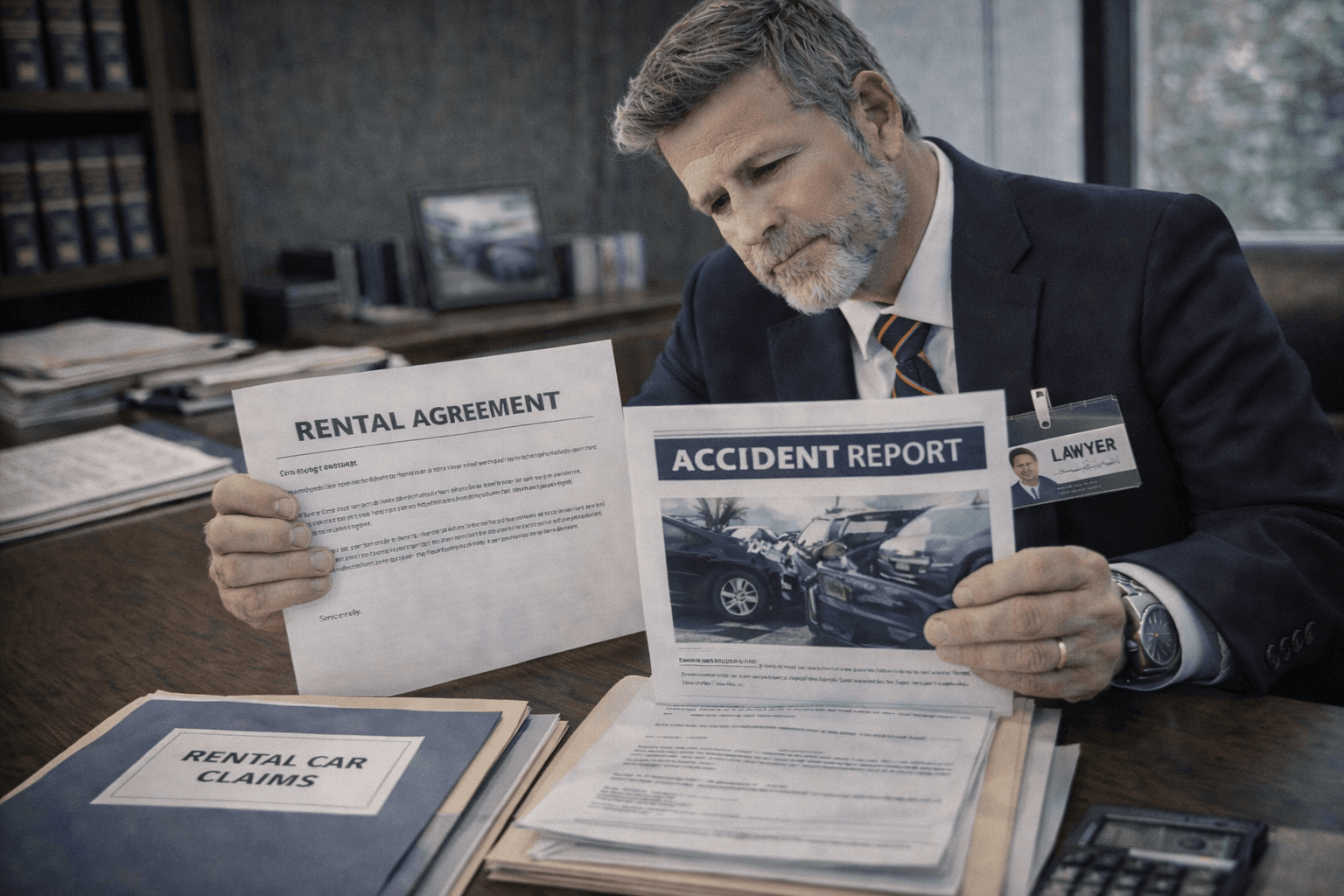
Rental car accidents involve multiple insurance layers and contractual obligations. This guide explains how rental car insurance and stacked coverage layers affect liability analysis and what evidence is required to resolve claims. A complete file should connect the car accident settlement range to the auto accident claim timeline, collision liability, and full personal injury damages profile. It should also flag insurance bad faith, document a pain and suffering claim, preserve medical bills recovery and lost wages claim proof, apply comparative fault rules, and support a clear demand package within policy limits.
This overview explains how rental car accident lawyer guide considerations shape evidence, liability, and recovery planning.
Rental car claims are more complex than standard vehicle claims because the rental agreement, personal auto policy, and credit card benefits can all apply. Understanding the order of coverage helps you avoid delays and protect your claim.
Definitions and Key Concepts
Definition Table
The Term refers to cDW/LDW. Practical Meaning: Collision/loss damage waiver. Why It Matters: Limits rental damage liability. The Term refers to primary coverage. Practical Meaning: First payer in claim. Why It Matters: Determines order of claims. The Term refers to secondary coverage. Practical Meaning: Pays after primary. Why It Matters: Common in credit card benefits. The Term refers to loss of use. Practical Meaning: Rental company claim for downtime. Why It Matters: Can add to damages. The Term refers to diminished value. Practical Meaning: Loss in vehicle resale value. Why It Matters: Sometimes claimed by rental companies.
Coverage Layers in Rental Car Accidents
Layer 1: At-Fault Driver’s Liability Insurance
If another driver caused the crash, their liability coverage is usually the primary payment source.
Layer 2: Your Personal Auto Policy
Your policy may cover rental vehicles, depending on terms. Collision and comprehensive coverage can apply.
Layer 3: Rental Company Products
Collision damage waivers or supplemental liability coverage can reduce your exposure for rental vehicle damage.
Layer 4: Credit Card Coverage
Some credit cards provide coverage, often secondary, and require specific documentation.
Step-by-Step: Rental Car Accident Claim Process
Step 1: Report the Crash
Notify law enforcement and the rental company. Obtain a police report number.
Step 2: Document the Scene
Take photos of damage, the rental agreement, and any other vehicles involved.
Step 3: Identify Coverage Layers
Review your personal auto policy, rental agreement, and any credit card benefits.
Step 4: Submit the Claim
Provide the rental company and insurers with the police report, photos, and claim details.
Step 5: Resolve Property Damage and Injuries
Property damage for the rental vehicle is handled through the coverage layers, while injury claims follow standard liability rules.
Evidence Checklist for Rental Car Claims
- Rental agreement and coverage selections
- Police report and incident number
- Photos of damage and scene
- Personal auto insurance declarations
- Credit card benefit documents (if applicable)
Decision Table: Who Pays in Common Scenarios
The Scenario refers to other driver at fault. Primary Payer: Other driver insurer. Secondary Payer: Your policy if shortfall. Notes: Document liability clearly. The Scenario refers to you at fault, have collision. Primary Payer: Your policy. Secondary Payer: CDW/credit card. Notes: Deductible may apply. The Scenario refers to you at fault, no collision. Primary Payer: CDW/LDW if purchased. Secondary Payer: Out-of-pocket. Notes: Rental terms matter. The Scenario refers to hit-and-run. Primary Payer: UM coverage or collision. Secondary Payer: Credit card coverage. Notes: State rules apply.
Rental Company Claims and Charges
Rental companies may seek compensation for:
- Repair costs or total loss value
- Loss of use while the vehicle is unavailable
- Administrative fees
- Diminished value in some cases
Reviewing Rental Charges
Ask for itemized statements and repair invoices. Dispute charges that are unsupported by documentation.
State Law Considerations
State insurance rules affect coverage and liability. Some states require minimum liability coverage for rental vehicles, while others place more responsibility on the renter’s personal policy.
Rental Agreement Terms That Matter
The rental agreement often defines reporting deadlines, authorized drivers, and permitted uses. Violating these terms can reduce or eliminate coverage benefits.
Key Terms to Review
- Authorized driver restrictions
- Geographic use limitations
- Prohibited uses (rideshare, off-road)
- Reporting requirements and timelines
Evidence Preservation for Rental Claims
Rental claims can involve rapid vehicle repairs, so document damage promptly.
Evidence Checklist
- Photos of damage before vehicle is moved
- Copies of the rental agreement and inspection sheets
- Any pre-existing damage notes
- Receipts for towing or storage
Business Travel and Employer Policies
If the rental was for business use, employer policies or corporate travel insurance may apply. Confirm whether your employer provides coverage or requires specific reporting steps.
Checklist: Rental Car Claim Readiness
- Police report obtained
- Rental agreement and coverage selections saved
- Photos and video preserved
- Insurance policy terms reviewed
- Credit card benefit terms confirmed
Internal Navigation: Related Car Accident Guides
- For property damage steps, see the property damage claim guide.
- For claim timing, read the claim timeline guide.
- For uninsured scenarios, see the UM guide.
- For hit-and-run issues, read the hit-and-run guide.
- Return to the car accidents hub.
Source Box (Official .gov References)
- National Highway Traffic Safety Administration: https://www.nhtsa.gov
- U.S. Department of Transportation: https://www.transportation.gov
- USA.gov insurance resources: https://www.usa.gov/insurance
- U.S. Courts: https://www.uscourts.gov
Related Resources
For broader context, review the Car Accidents hub.
Related Guides
- Auto Accident Lawyer: What They Do and When You Need One
- Average Car Accident Settlement in the U.S.
- Car Accident Attorney Near Me: Questions to Ask Before You Sign
Pillar guide: Car Accident Lawyer: How to Choose the Right One (2026)
Helpful Tool
Use the Car Accident Checklist Google Sheets to organize documentation, expenses, and insurance claim records while applying this guide.
More Car Accidents Guides
Car Accident Lawyer: How to Choose the Right One (2026)
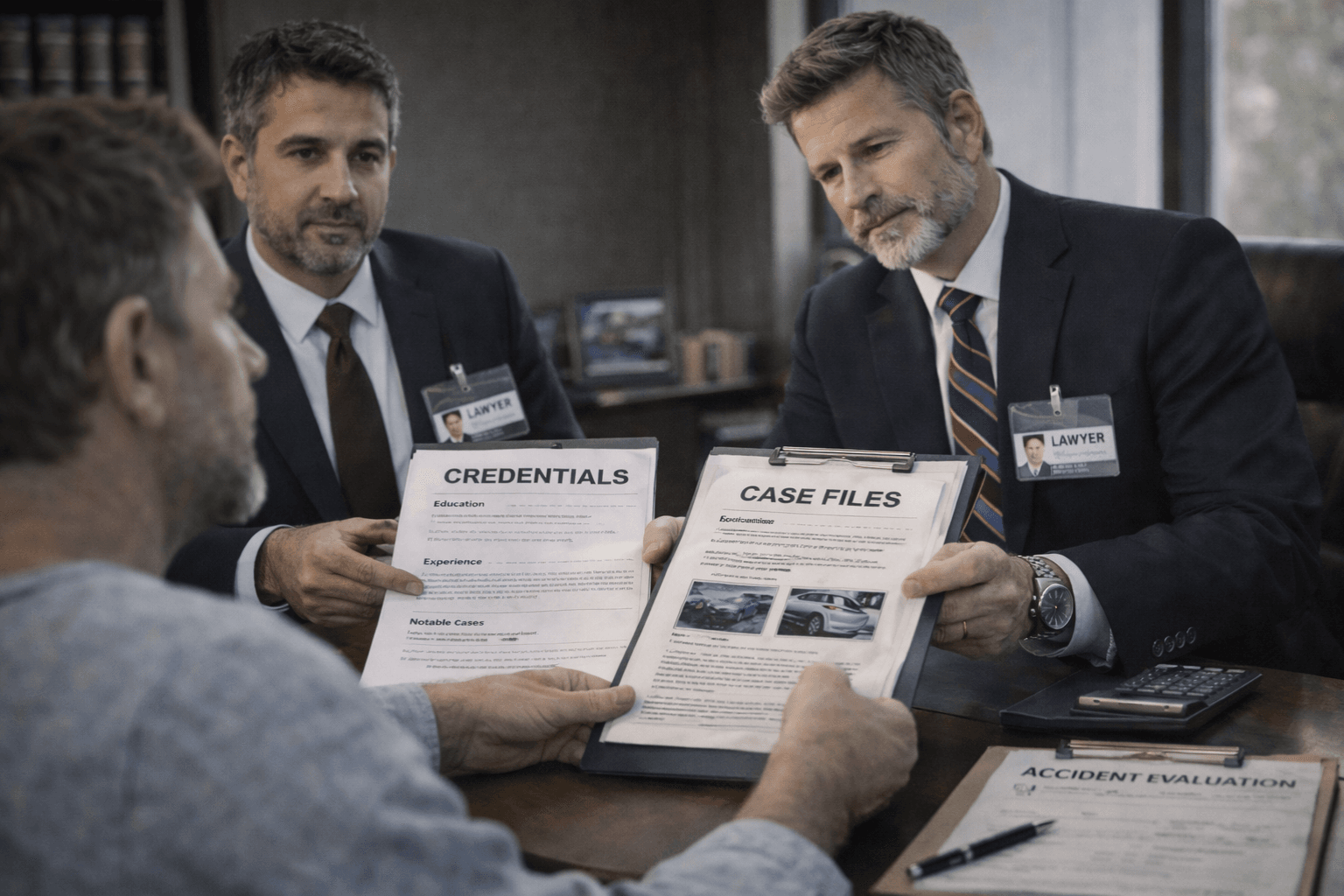
A 2026 guide to choosing a car accident lawyer, with selection criteria, evidence readiness, fee models, and decision steps. Read our comprehensive and exper...
Pain and Suffering Calculator for Car Accidents
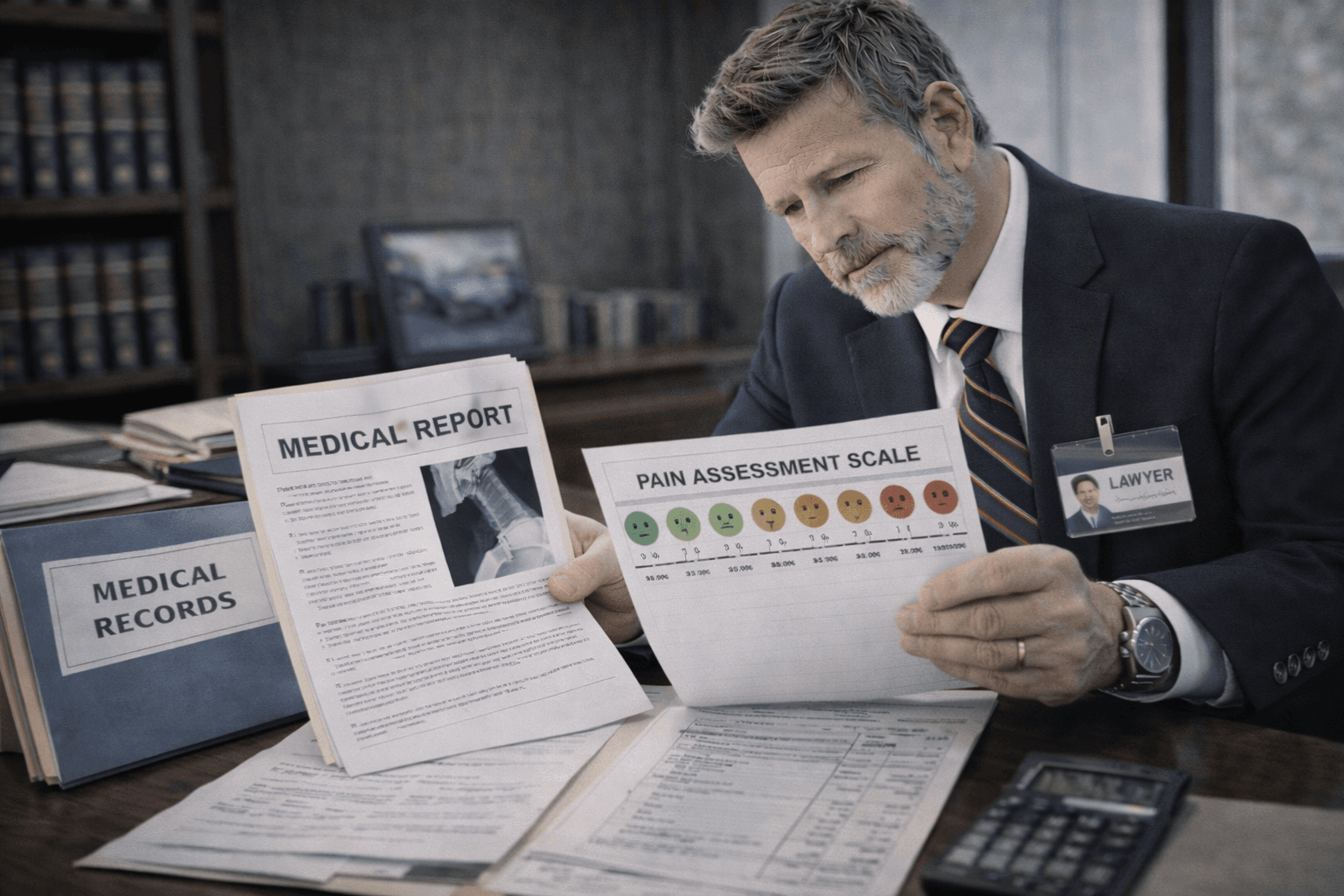
A structured guide to estimating pain and suffering in car accident claims using documentation quality, injury severity, and duration. Read our comprehensive...

Car Accident Lawsuit: When to Sue, How It Works, and What to Expect
A complete guide to deciding when to file a car accident lawsuit, how the process works, and what evidence and timelines control outcomes. Read our comprehen...

Car Accident Attorney Near Me: Questions to Ask Before You Sign
A structured list of questions to evaluate a local car accident attorney, with evidence, fees, and case management guidance. Read our comprehensive and exper...

Uninsured Motorist Claim After a Car Accident
A step-by-step guide to uninsured motorist (UM) claims after a car accident, including coverage rules, evidence, and timing. Read our comprehensive and exper...

Rear-End Collision Settlement
A guide to rear-end collision settlement value, including liability assumptions, evidence strength, and damage documentation. Read our comprehensive and expe...
Related Documentation Tools
View all toolsThese free spreadsheets help organize evidence, deadlines, and claim documentation for this topic.
Car Accident Settlement Calculator Google Sheets
Estimate negotiable case value and keep damages evidence aligned with Settlement Calculator and Economic Damages before you share records with an insurer or attorney.
Car Accident Checklist Google Sheets
Build a timestamped evidence file that keeps facts consistent with Accident Overview and Driver Information before you share records with an insurer or attorney.
Car Accident Police Report Tracker Google Sheets
Build a timestamped evidence file that keeps facts consistent with Accident Overview and Police Report Log before you share records with an insurer or attorney.
Insurance Claim Tracker Google Sheets
Estimate negotiable case value and keep damages evidence aligned with Claim Overview and Claim Timeline before you share records with an insurer or attorney.