Access
Free
No subscription
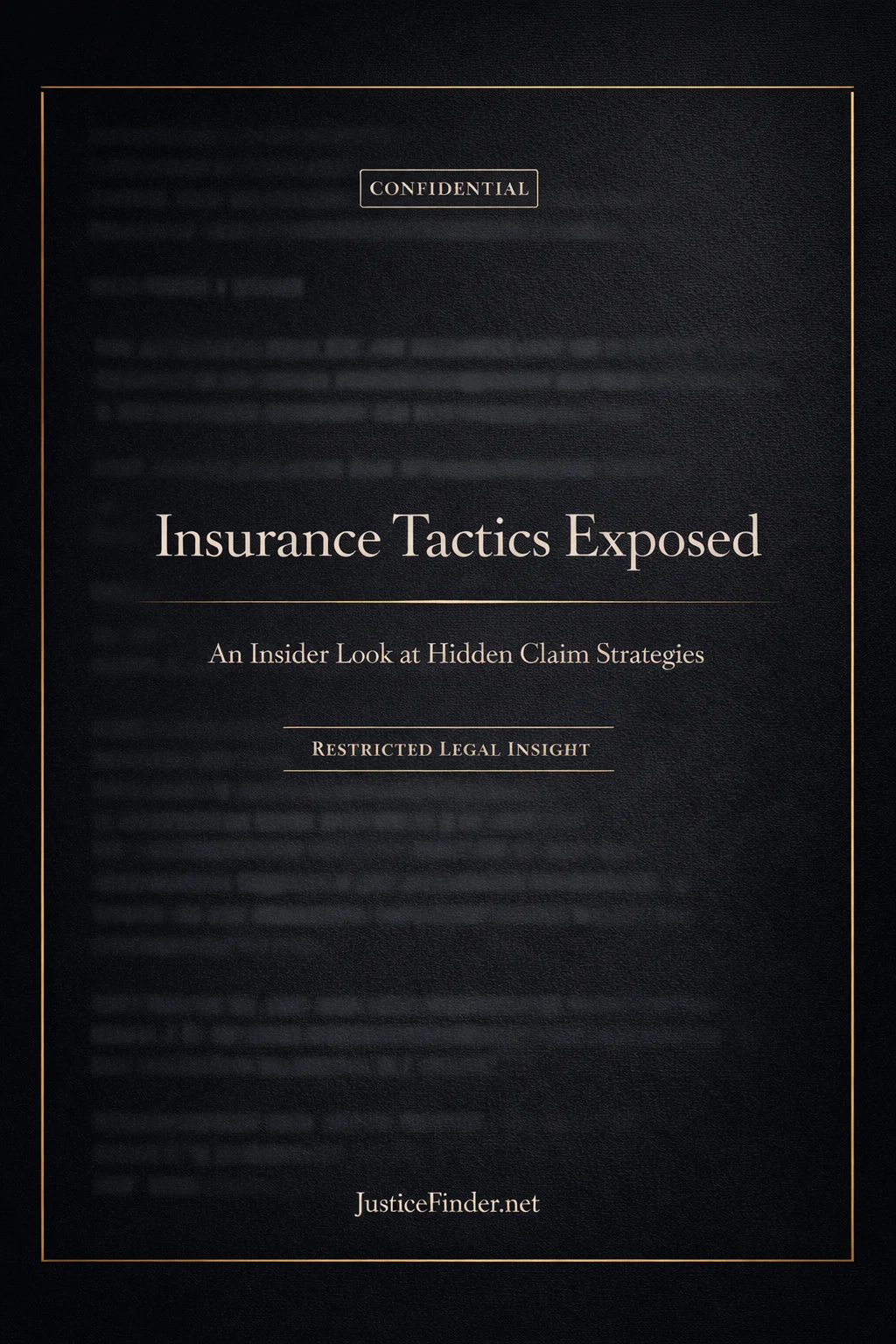
See the 12 pressure moves adjusters use, what each one is trying to accomplish, and the exact counter-position that protects your record.
Access
Free
No subscription
Format
Protected PDF
Print or digital use
Delivery
Instant
After email confirmed
The Problem
Most claimants do not recognize adjuster tactics until after they have already given away leverage or weakened causation.
Built for:
Any claimant dealing with insurance contact, delay, denial, or pressure.
The Solution
Shows the tactic, the risk, and the countermove so claimants can slow the conversation down, document it properly, and protect the file before the claim gets steered off course.
Breaks down the quick lowball, recorded statement trap, delay pressure, and comparative-fault inflation playbook.
Pairs every tactic with a documented defense response and communication-log mindset.
Built to open the funnel: free download, then next-step claim organization and negotiation resources.
What's Inside
Who This Is For
What You'll Learn
Source Anchors
This guide references official government sources, not opinion.
USAGov Consumer Complaint Routing
Official starting point for vehicle and consumer complaint escalation paths.
NHTSA Traffic Records Standards
Crash-documentation and reporting fields that shape evidence quality.
CMS Medicare Secondary Payer Recovery
Official Medicare recovery workflow relevant to settlement timing and lien math.
Free Tools That Pair With This Guide
Frequently Asked Questions
The 12 most documented tactics include the quick lowball offer, recorded statement traps, delay pressure, medical necessity disputes, comparative fault inflation, social media surveillance, IME manipulation, the friendly persona tactic, documentation overload, coverage dispute tricks, and take-it-or-leave-it pressure. The Playbook covers each one with a specific defensive countermove.
Not without preparation. Adjusters use recorded statements to lock your injury description, establish pre-existing condition narrative, and limit your damages claim. The Playbook explains what to say, what to avoid, and how to delay or limit a recorded statement request.
A lowball offer typically arrives early before treatment is complete, omits future medical costs, applies a low multiplier to soft-tissue injuries, or anchors at a number designed to appear reasonable. The Playbook's comparison guide shows what a fair offer structure looks like versus the typical opening tactic.
Document every contact attempt with dates and times, send written follow-ups by email to create a paper trail, set response deadlines in writing, and report excessive delays to your state's insurance commissioner. The Playbook includes a communication log template designed for exactly this situation.
Yes. Posts showing physical activity, travel, or emotional well-being inconsistent with your claimed injuries are used to dispute damages. The Playbook's social media section explains what to lock down, what to avoid posting, and how long surveillance risk typically persists.
An IME is a medical exam requested by the insurer with a doctor of their choosing. In most states, you must comply if your own insurer requests it under your policy terms. Third-party IMEs have different rules. The Playbook explains your rights before, during, and after the exam.
Record every call with date, time, adjuster name and employee ID, what was said, and any commitments made. Follow up phone calls with email summaries stating 'per our conversation.' The Playbook includes a structured communication log template that creates an admissible paper trail.
It means the adjuster attributes a higher percentage of fault to you than the evidence supports in order to reduce the insurer's payout under comparative negligence rules. The Playbook explains how to identify when fault allocation is being inflated and how to document evidence that contradicts it.
The guide is free in exchange for your email address. JusticeFinder uses it as an educational lead magnet. After you access the guide, you may receive follow-up content about paid tools like the Claim Kit or Settlement Blueprint, but there is no obligation and you can unsubscribe at any time.
Anyone who has already been contacted by an insurance adjuster, is facing delay or denial, received a lowball offer, or wants to understand insurer behavior before engaging further. It is also useful for claimants who feel pressure to settle quickly without understanding the full value of their damages.
Free educational guide only. It explains common insurer behavior but cannot analyze the lawfulness of conduct in your specific state or claim.
Complete the Funnel
Each guide covers a different phase of the same claim journey.

Complete 10-step documentation system for the first 30 days after a crash.

Counter lowball offers with a negotiation framework built around actual claim math.
Continue Exploring
JusticeFinder is designed so every visit can turn into a concrete next step, whether that means opening a calculator, reading a guide, organizing records, or searching the library directly.